What is AI sentiment analysis and how can it aid forex traders?
AI sentiment analysis in trading uses artificial intelligence, often leveraging large language models (LLMs), to process and understand the prevailing emotional tone – whether…

AI sentiment analysis in trading uses artificial intelligence, often leveraging large language models (LLMs), to process and understand the prevailing emotional tone – whether optimistic, pessimistic, or neutral – expressed across vast amounts of text-based information, like news articles and social media, to gauge the collective market mood towards specific currency pairs or economic indicators.
Why does it matter for a forex trader?
Market sentiment, the overall mood or attitude of traders towards a particular asset, can significantly influence currency prices. Manual analysis of this sentiment is incredibly time-consuming, requiring you to read countless news headlines, social media posts, and economic reports. AI sentiment analysis helps forex traders by rapidly sifting through this colossal amount of data, providing insights into the collective perception of a currency's strength or weakness. This can alert you to potential shifts in market dynamics that might impact your trading decisions, giving you a valuable informational edge.
How does it actually work?
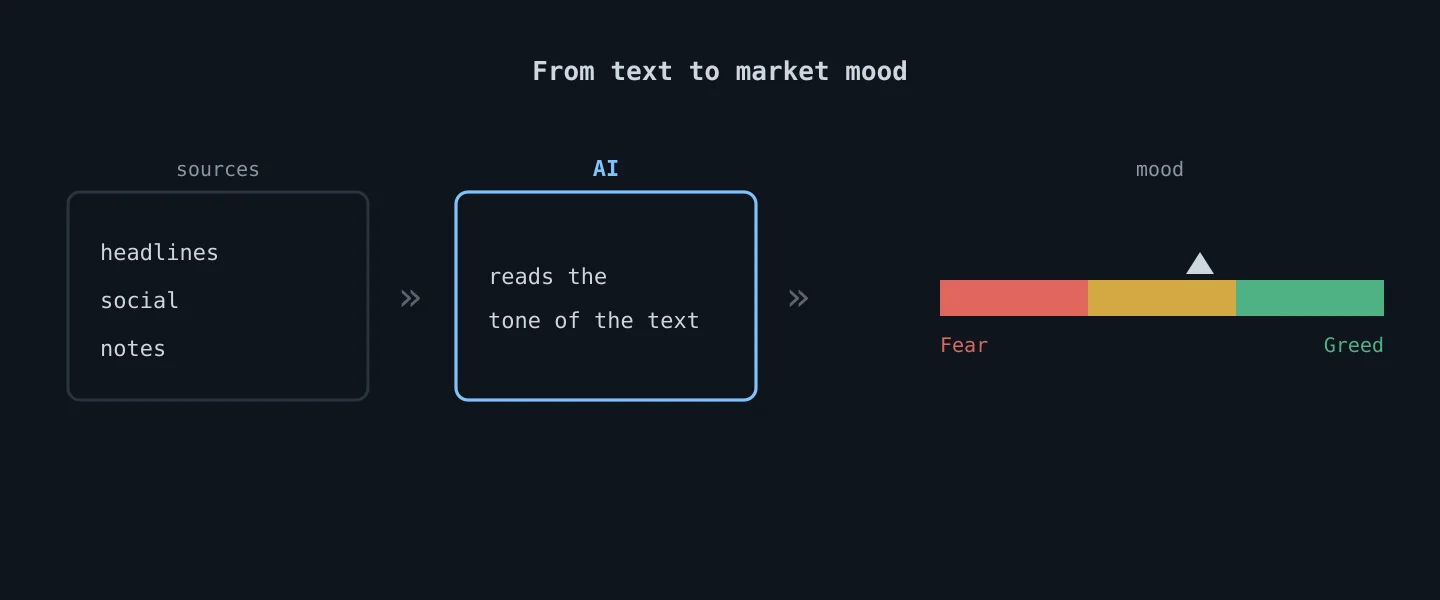
An AI sentiment model, often powered by machine learning algorithms or sophisticated large language models (LLMs), is trained to recognize emotional patterns and keywords in text. Machine learning is a field of AI that allows computers to learn from data without being explicitly programmed. LLMs are advanced AI models that understand and generate human-like text. The AI ingests data from diverse sources, including financial news sites, economic calendars, central bank statements, and social media discussions relevant to forex. The AI then assigns a sentiment score (positive, negative, or neutral) to specific phrases, sentences, or entire documents concerning a currency pair, a commodity, or economic events. For example, it might identify a consistently negative tone around a country's economic outlook, suggesting bearish sentiment for its currency, or detect growing optimism following a central bank announcement. This process transforms unstructured text into quantifiable sentiment data that can be monitored over time.
What are the limits you must respect?
It is crucial to remember that AI sentiment analysis is a co-pilot, not a pilot. It analyzes existing information to reflect current sentiment; it does not predict future price movements or provide trading signals. AI can sometimes misinterpret nuanced human language, sarcasm, or context-specific jargon, leading to inaccurate sentiment readings. Moreover, market sentiment can shift instantly, making past sentiment data quickly outdated. You must always combine AI sentiment insights with your own fundamental analysis and technical analysis – looking at price charts and indicators – before making any trading decision. Never let AI trade for you; it is a tool to enhance your research and understanding, not replace your judgment or risk management.