
Education
196 articles

Market Readiness Score: How to tell if conditions favor your trade before you enter?
Direction is only half the trade. Before you ask where price is going, ask whether the market is even ready to move — and learn the five factors that answer it.

Pips vs points vs ticks: the 5-digit broker confusion
MT5 counts in points, not pips. On a 5-digit broker a point is a tenth of a pip, so a spread of 12 is 1.2 pips. How to tell pips, points and ticks apart.

ECN vs STP vs market maker: who is on the other side of your trade?
Three labels for what a broker does with your order. Which one is yours, and why does the licence say more than the account page?

Slippage vs requote vs gap: why did you get a different price?
Three events, one symptom: the price you got is not the one you clicked. Which one hit you, and what decides if a move reaches you as slippage or as a requote?

Backtest vs forward test vs walk-forward: three tests, and only one runs in real time
Backtest and walk-forward both run on the past; only a forward test runs on prices that did not exist yet. The three side by side, and the MT5 option that borrows the name.
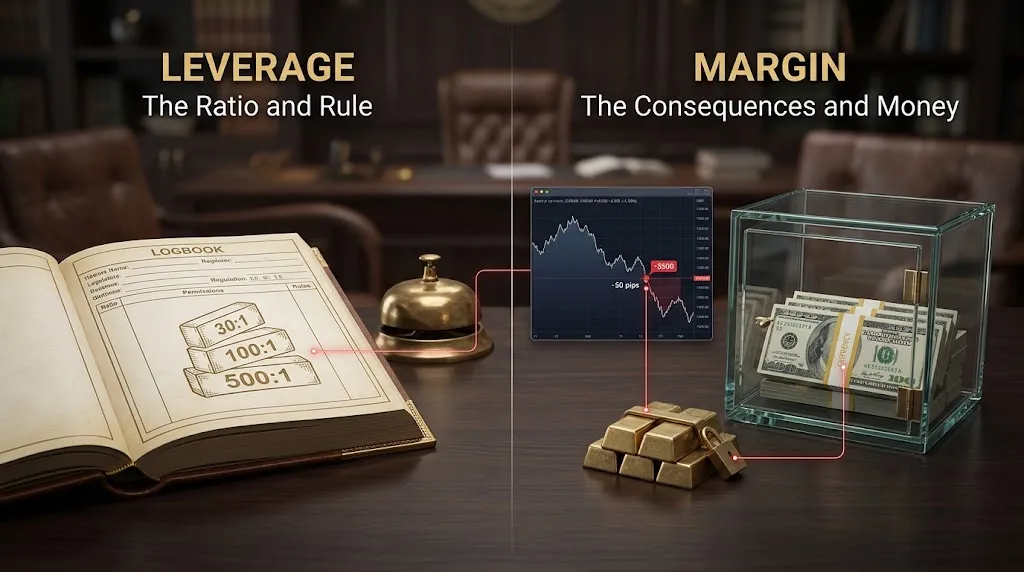
Margin vs leverage: one is a ratio, the other is money
One is a permission your broker grants, the other is money a single trade locks and returns. The same position at four leverage settings, and the one number that never moves.

Spread vs commission vs swap: what a trade really costs
Three costs, one bill, charged at three different moments. What does one standard lot of EUR/USD held overnight really cost, and which of the three takes over after night two?

Balance, equity, margin and free margin: what your terminal is telling you
Five numbers along the bottom of your platform, and the one beginners watch is the one that cannot tell them anything. What each means, and which decides if your trades stay open.

Order block vs supply and demand zone vs support and resistance: what really separates them
The three vocabularies often mark the same rectangle. Where they genuinely differ is the evidence each one demands before you draw it — and that part is checkable on any chart.

CPI vs PPI vs PCE: the inflation number the Fed actually watches
What does each one measure, why is the Fed’s target written on PCE, and which one actually moves the dollar? Three inflation measures, one month, two points apart.

What is the Reserve Bank of New Zealand (RBNZ)?
The Reserve Bank of New Zealand sets the Official Cash Rate behind the kiwi. Why did the kiwi fall on the day the RBNZ hiked in September 2026?

What is the Swiss National Bank (SNB)?
The Swiss National Bank reviews policy for the franc four times a year, and in 2015 it dropped the euro floor it had promised to defend.

What is the JOLTS report?
JOLTS counts US job openings, hires, quits and layoffs. Why does it arrive a month late, and how does it fit next to payrolls and jobless claims?

What is the PPI (Producer Price Index)?
The Producer Price Index measures inflation at the factory gate. What does it count, how does it differ from CPI, and when does a PPI surprise move the dollar?

What is the PCE price index, and why does the Fed target it?
The PCE price index is the measure the Fed's 2% inflation goal is written in. What does it count, how is core PCE different, and why can it move the dollar after CPI?
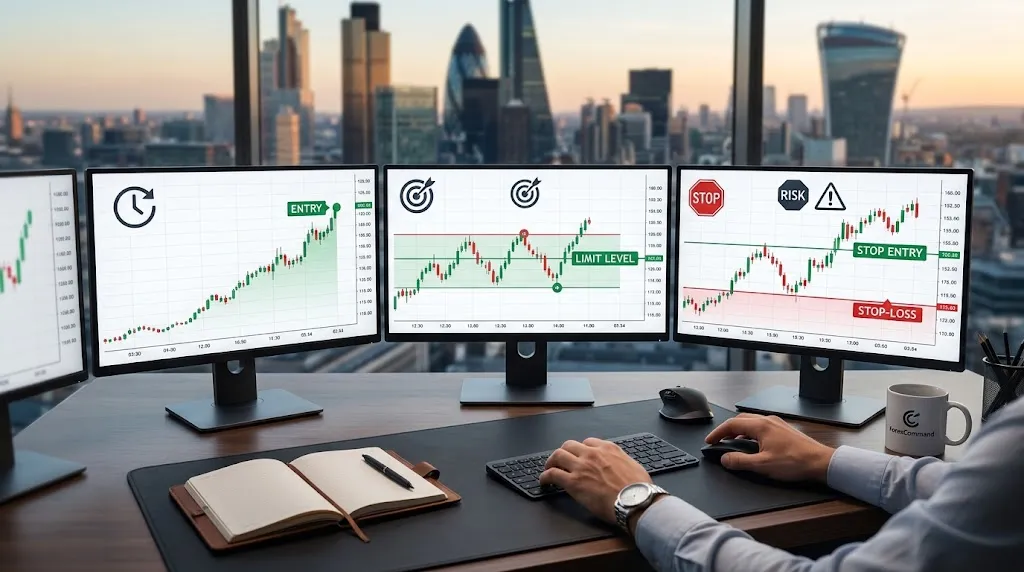
Market, limit and stop orders: which one should you use and when?
Mastering forex trading requires understanding three core order types: use a market order for immediate execution at the current price, a limit order to buy below or sell above…

What is a swap in forex?
A swap, also known as rollover interest, is the interest a forex broker charges or pays a trader for holding a position open past the daily market close (usually 5 PM New York…

What are Initial Jobless Claims (IJC)?
Initial Jobless Claims (IJC) is a crucial weekly economic report that tallies the number of individuals who filed for state unemployment benefits for the first time during the…

