What is the difference between AI trading bots and algorithmic trading?
Algorithmic trading utilizes predefined rules to automatically execute trades based on specific market conditions, while AI trading bots leverage machine learning and large…

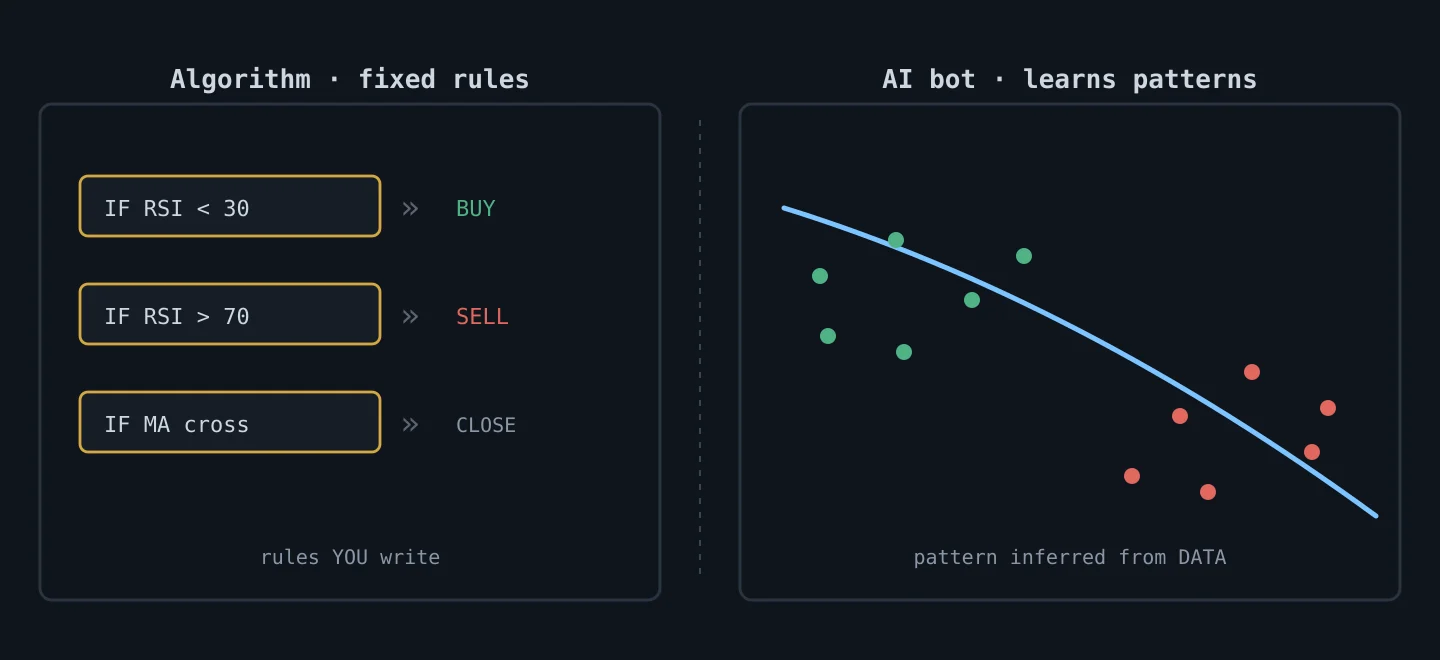
Algorithmic trading utilizes predefined rules to automatically execute trades based on specific market conditions, while AI trading bots leverage machine learning and large language models (LLMs) to analyze vast datasets, identify complex patterns, and offer sophisticated insights that assist a human trader, acting as an advanced co-pilot.
Why does it matter for a forex trader?
Understanding this distinction is crucial for setting realistic expectations and effectively integrating new technologies into your trading workflow. Algorithmic trading automates known strategies, offering speed and consistency in execution. AI, on the other hand, provides an additional layer of intelligent analysis, helping you navigate the complex and data-rich forex market more effectively.
For beginner traders, distinguishing between these tools helps you understand what capabilities you are actually seeking. Are you looking for automated execution of a known strategy, or advanced analytical assistance to inform your discretion? AI's role as a co-pilot can significantly enhance your research and decision-making process.
How does it actually work?
Algorithmic trading operates on explicit, pre-programmed instructions. For example, an algorithm might be coded to buy a currency pair when its price crosses a specific moving average, or sell when it hits a certain profit target. These systems execute trades efficiently without human intervention, following rules defined by the trader.
AI trading bots, however, employ more advanced techniques like machine learning (ML) and large language models (LLMs). Machine learning allows a system to "learn" from historical data, identifying intricate patterns and relationships that might escape human observation. This could involve recognizing recurring market structures or identifying sentiment shifts. LLMs process and understand human language, enabling them to analyze news articles, economic reports, and social media for sentiment or key information that could influence market moves. When backtesting a strategy, AI can assist in evaluating its historical performance across various market conditions. Together, these AI tools provide analytical insights and research support, never fully autonomous trading.
What are the limits you must respect?
It is absolutely critical to remember that AI and LLMs are a CO-PILOT, not a PILOT. They are powerful information, research, and analysis tools, but they cannot predict the future or guarantee profits. AI models are trained on past data, and while they can identify patterns, future market events can always diverge from historical trends.
AI cannot account for unforeseen "black swan" events or completely novel geopolitical shifts. The ultimate trading decision, risk management, and the crucial element of consistency in trading psychology always remain with the human trader. Do not fall for the myth of a "set it and forget it" AI system that trades for you. AI enhances your ability to make informed decisions; it does not replace your responsibility or judgment.