
What are Central Banks?
Central banks are independent public institutions that manage a nation's currency, monetary policy, and overall financial system, aiming to maintain price stability, promote…

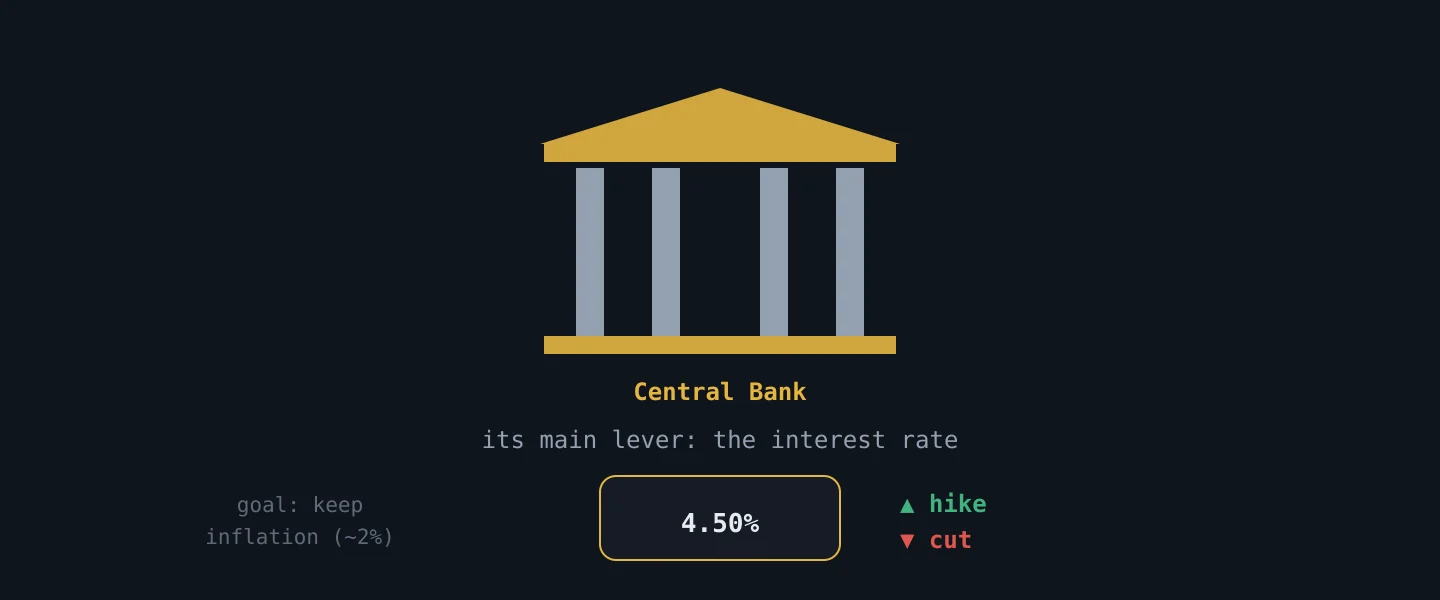
Central banks are independent public institutions that manage a nation's currency, monetary policy, and overall financial system, aiming to maintain price stability, promote economic growth, and ensure the stability of the banking sector by controlling the money supply and setting interest rates.
Why does it matter for forex?
Central banks are arguably the most influential players in the forex market. Their policy decisions directly impact the value of a nation's currency. When a central bank changes its monetary policy – the actions it takes to influence the availability and cost of money – it sends strong signals about the economic health and future direction of that currency.
For a forex trader, understanding central bank policy is crucial because it drives exchange rate movements. A currency's strength or weakness relative to another is often a direct reflection of the differing monetary policies and economic outlooks between their respective central banks. Their actions can create significant trading opportunities or risks.
How does it work?
Central banks primarily influence the economy and currency through monetary policy tools. The most well-known tool is setting the benchmark interest rate, which is the rate at which commercial banks can borrow from the central bank. Raising interest rates typically makes a currency more attractive to foreign investors seeking higher returns, thereby increasing demand for that currency and potentially strengthening it. Conversely, lowering rates can have the opposite effect.
Another tool is quantitative easing (QE), where a central bank buys government bonds or other assets to inject money into the financial system, or quantitative tightening (QT), where it sells assets to reduce the money supply. These actions influence liquidity and long-term interest rates, affecting economic activity and currency valuation. Central banks also act as a "lender of last resort" to commercial banks, ensuring financial stability.
What should a trader watch?
Forex traders closely monitor central bank announcements and publications. Key events include interest rate decisions, policy statements, and press conferences, which provide insights into the central bank's current assessment of the economy and future policy direction. These events are often scheduled and can lead to immediate and significant market volatility.
Traders also pay attention to economic data releases such as inflation reports, employment figures, and GDP growth, as these are the same metrics central banks use to inform their policy decisions. Understanding how a central bank is likely to react to incoming data can help traders anticipate potential currency movements. It's about gauging the central bank's "tone" – whether it's hawkish (suggesting rate hikes or tighter policy) or dovish (suggesting rate cuts or looser policy).