Why Does a Hawkish Fed Crush Gold? The Real-Yield Link, Explained
Gold just had its worst month in years while the Fed turned hawkish. The link between the two has a name — real yields — and it is the most important number gold traders ignore.

Gold is staring at an 11% monthly loss while the Fed talks about hiking. That's not a coincidence — it's a mechanism. The bridge between the two is a single concept most headlines skip: the real yield.
What is a real yield?
A real yield is the interest you earn after stripping out inflation. If a Treasury pays 5% and inflation runs at 2%, your real yield is roughly 3%. It is the true reward for holding a safe, interest-bearing asset — and it is the number gold competes against.
Why does gold hate them?
Gold pays no interest. Its entire pitch is "store of value." When real yields are low or negative, holding cash-like assets costs you purchasing power, so gold's zero yield looks fine. But when real yields rise, every dollar in gold is a dollar not earning that real return. The opportunity cost climbs, and money rotates out of gold and into yield. A hawkish Fed — higher policy rates, firm inflation-fighting resolve — is a real-yield machine, which is why FXStreet said the hawkish turn "upended the game plan for gold."
Is this time different?
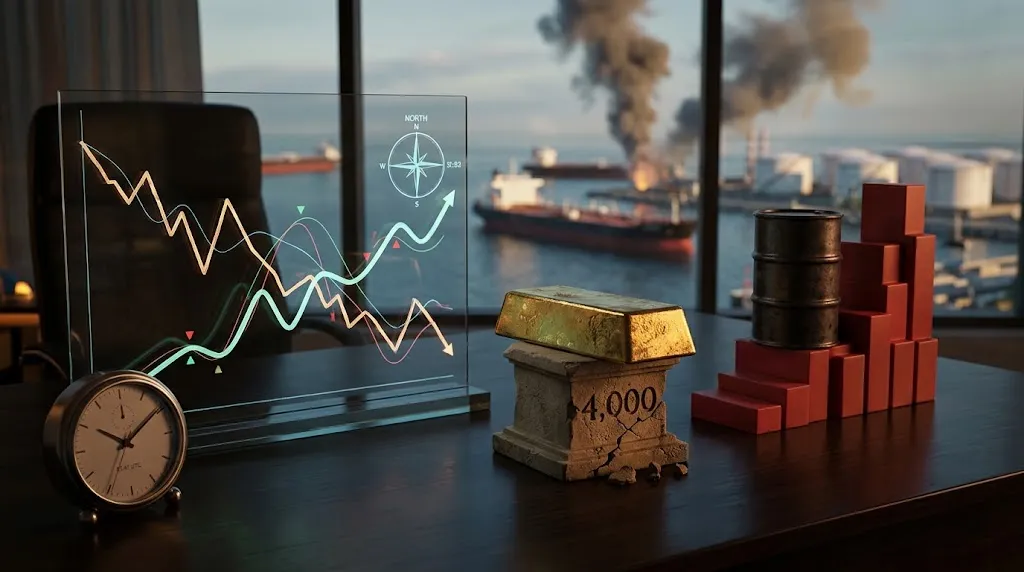
The mechanism never changes; the levels do. Gold is clinging above $4,000 after a seven-month low, with $4,000 now described as a demand zone rather than a ceiling, and some desks (HSBC) suggesting the sell-off may be nearing an end. On the chart, that same loss of momentum printed a gold death cross — a lagging confirmation of the slide, not its cause. That's a level call, not ours — and levels are perishable. The real-yield logic isn't.
The takeaway
Don't watch gold in isolation. Watch real yields — they tell you whether the wind is at gold's back or in its face. When the Fed turns hawkish, that wind shifts, and gold usually feels it first.