What Happens to the Dollar When the Fed's Independence Is Questioned?
Central-bank independence is a currency's silent foundation. What happens to the dollar when that independence is called into doubt, and why does gold reflect it instantly?

A strong currency rests on a credible central bank. When the market starts to doubt that the Federal Reserve can act without pressure, the dollar pays for it — and it pays fast.
The dollar's invisible foundation
A currency's value rests on a promise: that its central bank will set rates by the data — inflation, employment — and not by the political convenience of the moment. That independence is what lets investors trust that a dollar today will buy something similar tomorrow. When the promise wobbles, it isn't a single interest rate up for debate: it's the credibility of the whole currency, and that's a far deeper blow.
This time's trigger
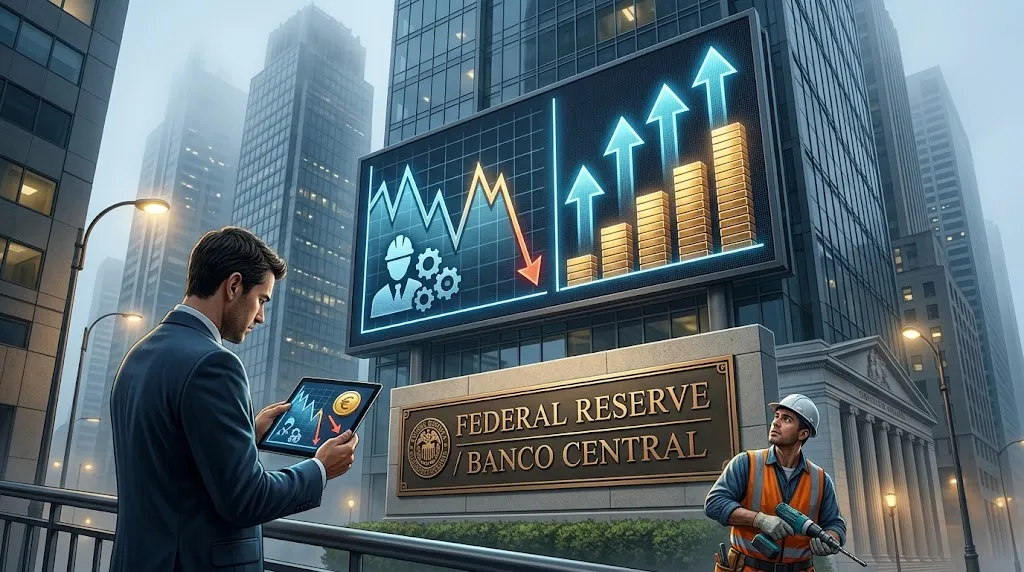
The recent alarm was a direct hit to the Fed's credibility: a criminal investigation into its chair, Jerome Powell, was reportedly opened. Beyond the details, the market reacted to what the episode symbolizes — the possibility of political pressure on the central bank — by selling US assets and seeking safety. The dollar itself, strong for months on the "higher-for-longer" narrative, sagged the moment independence entered the conversation.
The chain to the exchange rate
Institutional distrust reaches the currency through several channels at once:
- Risk premium. Investors demand more return to hold the country's assets, and part of that outflow shows up in the currency.
- Safe-haven flows. Capital rotates into gold, the Swiss franc and, depending on the moment, the yen.
- Rate expectations. If the market fears a Fed pressured to cut rates too soon, it prices in a weaker dollar.
All three need not play out: it's enough for the doubt to settle in for the dollar to trade at a discount.
Gold as the thermometer
The most visible reflection of this distrust is the precious metal: when the Fed's credibility is questioned, gold often spikes the same day. That's why it pays to read them together — we cover it in the piece on gold at $5,000. For a Forex trader, gold at highs while the dollar sags is confirmation that the problem is one of confidence, not a single data point. It's the kind of fragile backdrop our Market Readiness Score (MRS) weighs to flag when conditions call for caution.
The takeaway
Interest rates move the dollar day to day; credibility holds it up over the long run. When the Fed's independence is questioned, the market isn't repricing a data point — it's repricing trust in the entire currency. Watch the dollar, yes, but watch gold and the havens too: when they all point the same way, the signal is structural, not noise.