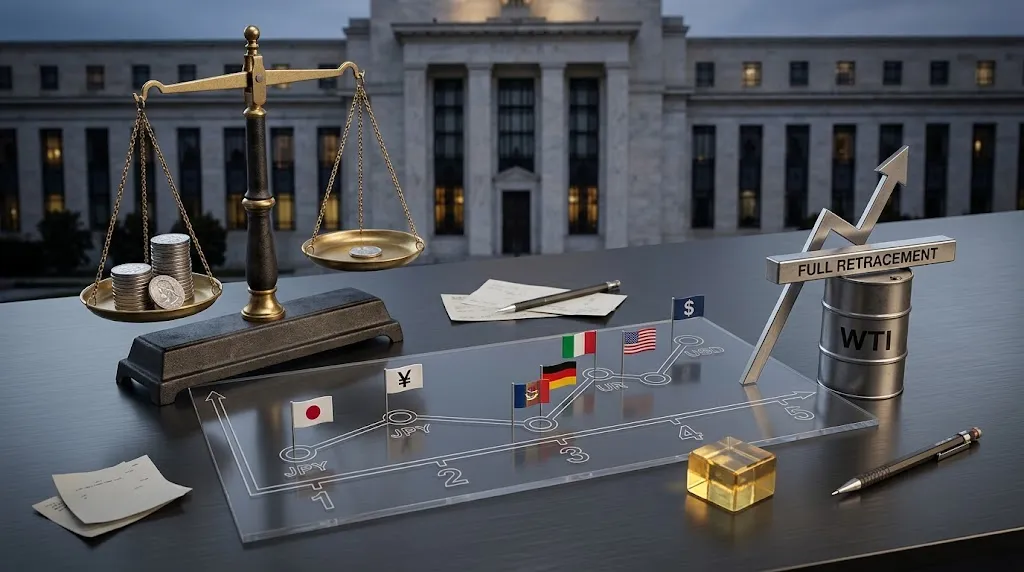
How Do Central Bank Rate Decisions Move Currencies?
Interest rate differentials are the gravitational force of the forex market. Understanding how the Fed, ECB, and BOJ set rates — and why — is the single most important macro concept for every forex trader.

If you had to reduce all of forex to a single variable, it would be this: interest rate differentials. Where money earns more, money flows. Central banks control that rate, and their decisions move currency markets more than any other force.

The Mechanism: Why Rates Matter?
When a central bank raises interest rates, assets denominated in that currency — government bonds, savings accounts, money market instruments — yield more. International capital chases yield. Investors convert their currencies to buy those higher-yielding assets, creating demand for the currency and pushing its value up.
The reverse is equally true: rate cuts reduce yield appeal, capital exits, and the currency weakens.
This is the foundation of carry trading, and it's also why interest rate expectations — not just actual decisions — drive price action. By the time the Fed officially raises rates, the market has already priced in the move weeks or months in advance.
The Three Central Banks That Move Everything
The Federal Reserve (Fed)
The world's most influential central bank. The US dollar is the global reserve currency, meaning Fed decisions ripple through every major pair. The FOMC meets eight times per year. Watch the dot plot — the Fed's own rate projections — and the Chair's press conference; the nuance in language often matters more than the actual number.
The European Central Bank (ECB)
Sets rates for the 20 eurozone countries. The ECB's primary mandate is price stability (2% inflation target), which sometimes puts it in direct tension with economic growth concerns across member states. EUR/USD is the most traded pair in the world — ECB decisions are never quiet.
The Bank of Japan (BOJ)
The outlier. The BOJ maintained near-zero or negative rates for decades while the rest of the world hiked, making the yen the world's primary funding currency for carry trades. Any signal of policy normalization from Tokyo sends shockwaves through JPY pairs and risk assets globally.
Trading the Decision vs. Trading the Expectation
Central bank meetings are scheduled events — they appear on every economic calendar. But the real edge is in reading expectations before the meeting. Three key tools:
- CME FedWatch Tool — shows market-implied probabilities for each FOMC outcome
- Forward guidance language — phrases like "data-dependent," "higher for longer," or "restrictive territory" are coded signals
- Inflation and jobs data — CPI and NFP prints shape rate expectations more than any analyst forecast
The Risk: Priced-In vs. Surprise
A fully priced-in rate hike can produce a "sell the news" reversal — the currency rallies into the announcement and immediately dumps when there's nothing left to price. A surprise cut in the opposite direction can trigger one of the fastest moves you'll ever see.
Position sizing and timing around central bank events demands discipline. These are the moments where fortunes are made and risk management is tested.
Know the rates. Know the expectations. Know the gap between them.