The Strait of Hormuz: how can one stretch of water move the entire forex market?
Around a fifth of the world's oil squeezes through one narrow strait. Threaten it, and crude spikes and currencies lurch. Here is how a choke point ripples into forex.

Roughly one-fifth of all the oil the world burns passes through a single stretch of water barely wide enough to matter on a map — the Strait of Hormuz. Put a credible threat there, and within hours crude spikes, currencies lurch, and traders half a world away feel it. That is the power of a choke point.
What is a choke point?
A choke point is a narrow passage that a huge share of global trade is forced to funnel through, with no easy detour — the geography leaves no alternative, or the alternative is far slower and costlier. Hormuz is the most famous, but the family includes the Suez Canal, the Strait of Malacca and Bab-el-Mandeb. When one is threatened, the world does not lose a little trade; it loses the cheapest, fastest route for a critical commodity all at once.
Why does a strait move the forex market?
Follow the chain. A threat to Hormuz does not stop the oil immediately — it prices in the risk that it might. Traders demand a premium to hold a barrel that could suddenly become scarce, so crude jumps. That single move fans out: the currencies of oil exporters strengthen, oil importers' currencies weaken, and higher energy prices feed inflation expectations, which in turn pull on interest-rate bets. One point on the map, and three different forex forces light up at once.
Which currencies feel it first?
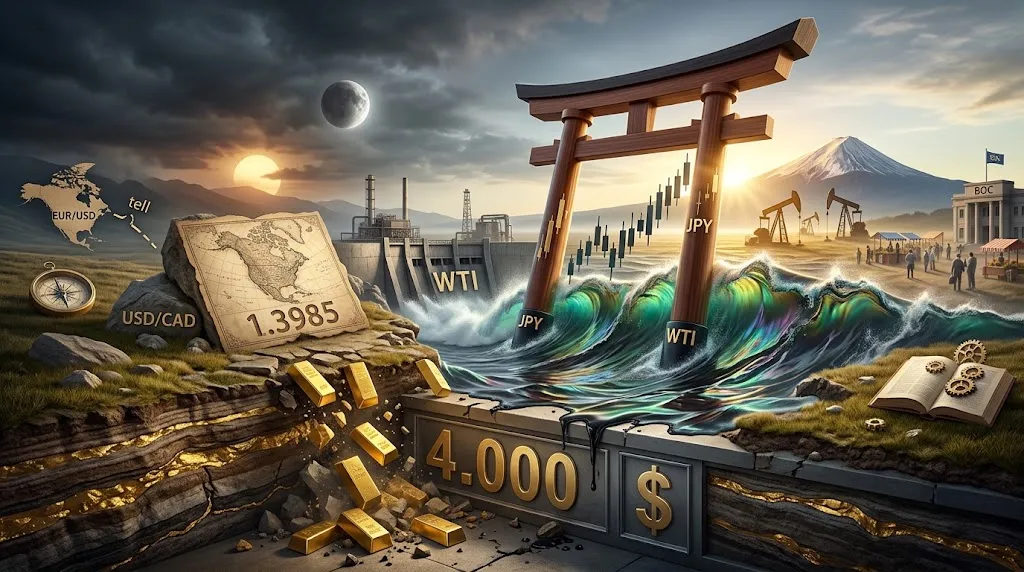
The commodity currencies react fastest. The Canadian dollar (CAD) and the Norwegian krone (NOK) tend to firm as crude climbs, because their economies sell oil. On the other side, big importers like Japan (JPY) and India (INR) face a larger import bill that weighs on their currencies. And because a Hormuz scare is also a fear event, the safe-haven reflex from the first explainer runs underneath it all — money still edges toward the dollar and the franc while the oil-linked moves play out.
Does the market always react the same way?
No — size and duration decide everything. A headline that fades in a day leaves barely a mark; a genuine blockage threatening weeks of supply is a different animal. The market is really pricing a probability: how likely is this to actually choke the flow, and for how long? That is why two similar-sounding headlines can produce wildly different moves — the market is not reacting to the news, but to its estimate of the consequences.
From concept to trade
The lesson of a choke point is that geography is leverage: one vulnerable location can move oil, and oil moves a cluster of currencies at once. When a choke-point headline lands, the useful reflex is not to guess the politics — it is to ask which currencies sit downstream of that oil, and whether the market believes the flow is genuinely at risk.
We have now seen the fear reflex (safe havens) and the trigger (choke points). Next we follow the oil itself: why some currencies live and die by the price of crude — the petrocurrencies.