

Geopolitics for Traders
13 articles
Explainers connecting the big geopolitical concepts to their concrete effect on the currency market: why does the dollar rise in a crisis? How does oil move the Canadian dollar? What is the geopolitical risk premium? The headline is the door; the mechanism is what you learn.

Safe havens: why does the dollar rise when fear hits the market?
A war headline hits and the dollar jumps while your AUD/USD sinks. That reflex has a name — the flight to safe havens. Here is the mechanism, not just the news.

The geopolitical risk premium: why does fear have a price in the market?
Two near-identical assets, one in a calm region and one in a tense one, trade at different prices. That gap is the geopolitical risk premium — and it moves currencies before anything happens.

Petrocurrencies: why does the Canadian dollar rise and fall with oil?
Crude ticks up and the Canadian dollar tends to follow, almost like a reflex. It is not a coincidence — it is what makes a currency a petrocurrency. Here is the mechanism.

Brent vs WTI: the two crude oil benchmarks
Brent and WTI are the two prices the whole oil market is quoted against — and the gap between them tells you what is moving global energy.

The Strait of Hormuz: how can one stretch of water move the entire forex market?
Around a fifth of the world's oil squeezes through one narrow strait. Threaten it, and crude spikes and currencies lurch. Here is how a choke point ripples into forex.

A Hormuz closure, step by step: how does the move travel through FX?
When the world’s key oil chokepoint is threatened, the move travels through currencies in a predictable pattern. Here is the map.

Tariffs and currencies: why does a trade war move the forex market?
A country announces tariffs and the other side's currency drops the next day. Why does a tax on imports move the forex market? The mechanism is more double-edged than it looks.

Sanctions and currencies: how can a political decision sink a currency?
In 2022 a currency lost close to a third of its value in days — not because of its economy, but because of a political decision. Here is how sanctions hit a currency, and why the effect is not always what it looks like.
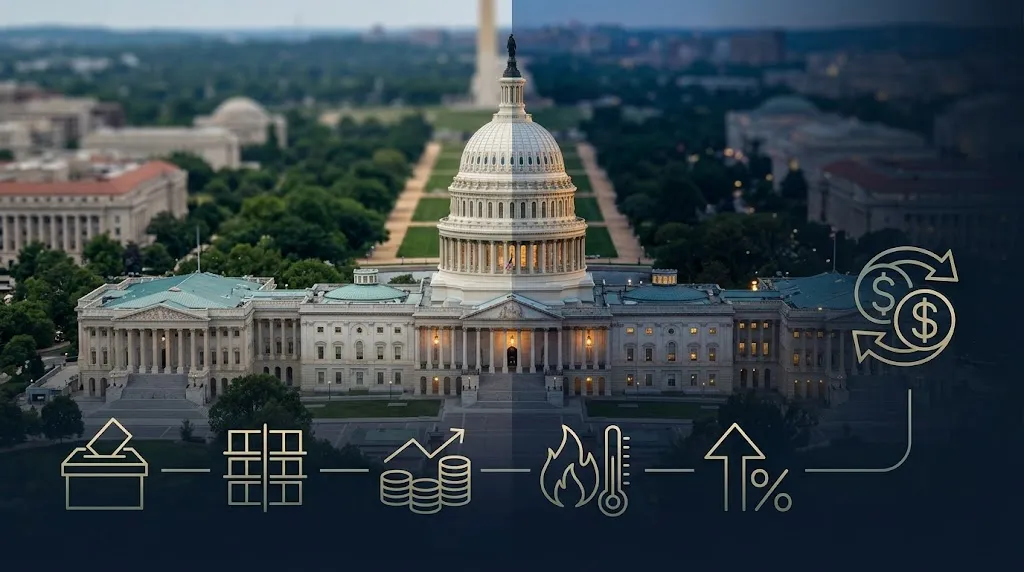
How do US midterm elections move the dollar?
A worked example of how geopolitics affects forex: midterm elections do not move the dollar because of who wins, but because of whether government ends up divided. The chain runs from spending to inflation, then to rates, and only then to the exchange rate.

What is de-dollarization?
De-dollarization is the slow effort by some countries to trade and save in currencies other than the US dollar — and it matters because the dollar sits on one side of most forex pairs.

Gold fell while war raged: why did the safe havens break this week?
The US struck Iran, Hormuz shut — and gold fell while the yen hit 40-year lows. The safe-haven playbook didn’t break; it flipped, because this shock is inflationary, not deflationary.
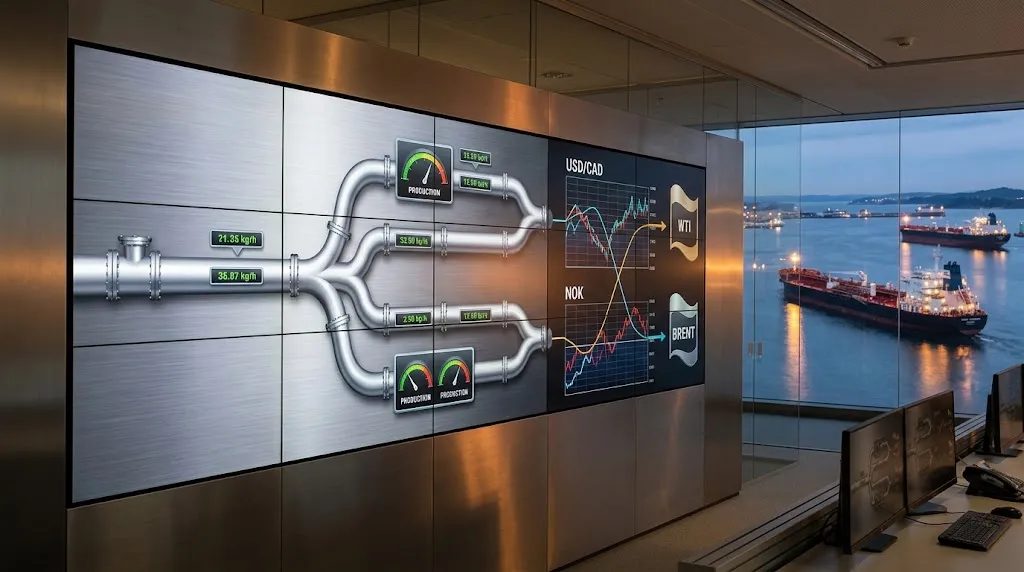
What is OPEC, and how do its decisions reach your currency pairs?
OPEC sets how much oil its members pump. How does that decision end up in USD/CAD, and what should a forex trader watch when OPEC+ meets?
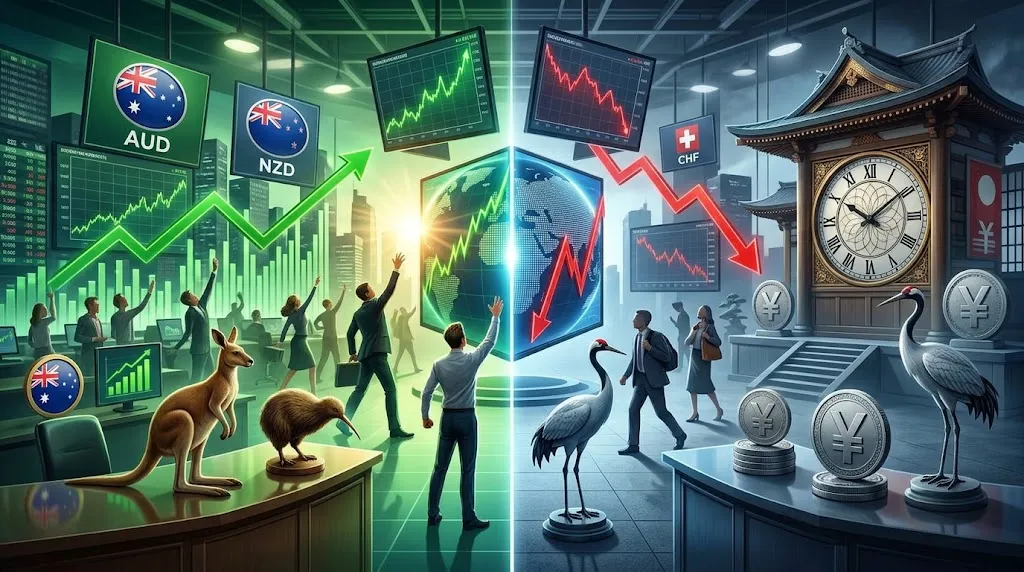
Risk-on vs risk-off: what each one really does in forex
Risk-on and risk-off side by side, checked against 188 sessions of 2026: the textbook pattern was rare, and the worst AUD/JPY days were often about the yen.

