How Do You Trade a High-Impact Release Without Getting Whipsawed?
The headline hits and price explodes both ways before it trends. How to survive the first minute of a major release: spreads, the spike trap, and the second move.

The headline hits, price explodes in both directions, your stop gets clipped — then the move you wanted finally happens without you. Here's how to survive the first minute of a major data release.
Why is the first move a trap?
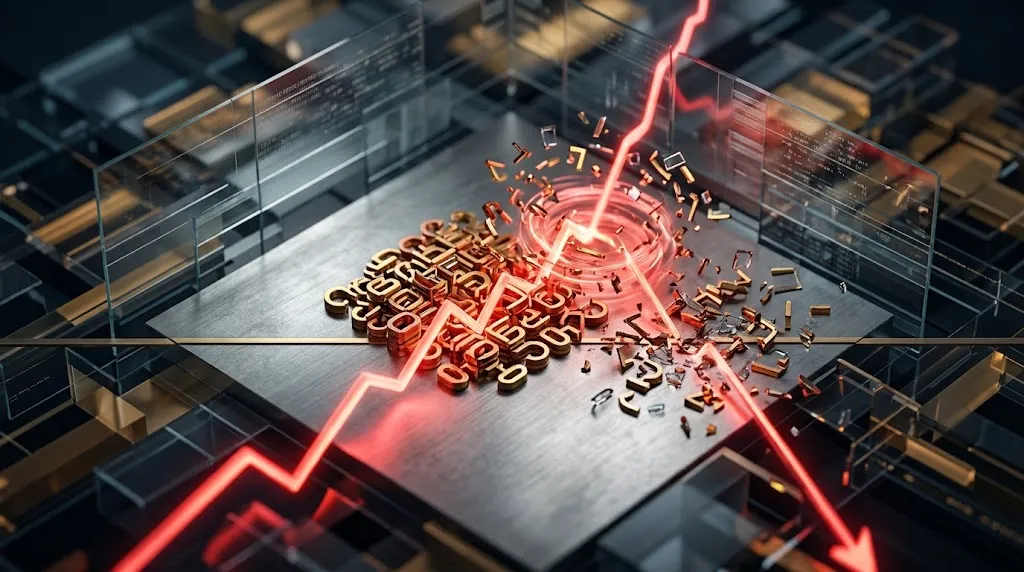
In the seconds after a high-impact print, liquidity vanishes. Market makers pull quotes, spreads blow out, and thin order books let price spike violently — often in the wrong direction first. That initial spike is not the trend; it's a liquidity vacuum. Traders who fire at the headline frequently get filled at the worst price and stopped by the whipsaw before the real move even starts.
Respect the spread
Right before and after the release, the spread can widen from a fraction of a pip to many pips. A tight stop placed into that gap can be triggered by the spread alone, not by genuine direction. If you hold a position through an event, your stop has to account for the widened spread — or you're handing the market a free exit.
Let the dust settle
A reliable approach is to skip the first spike entirely and wait for the market to choose a direction. Two common signals:
- The retest: after the initial spike, price often pulls back to the pre-release level. How it behaves there — rejection or acceptance — is more telling than the spike itself.
- The second move: the first candle is emotion; the move that follows, once spreads normalize, is positioning. Trading the second is slower but far cleaner.
Size for the volatility, not your hopes
Event risk is exactly when ranges expand without warning, so it's exactly when to lean smaller, not bigger. Tie your stop to recent volatility (an ATR-based stop adapts automatically) and solve for a position size that keeps your risk constant. A correct read with too much size still blows up on a routine whipsaw.
This is the judgment our Market Readiness Score (MRS) is built for: it weighs volatility and news risk together, and a fragile, high-event backdrop is the signal to widen stops and cut size.
The takeaway
You don't have to trade the headline to trade the news. Skip the liquidity vacuum, respect the spread, wait for the retest or the second move, and size down for the volatility. The traders who get whipsawed are the ones racing to be first; the ones who get paid are usually the ones who waited.