How do you keep trading discipline, whether you're a beginner or advanced?
Almost nobody loses for lack of knowledge — they lose by not executing. Discipline isn't an innate trait but a system, and it's built differently for the beginner than for the advanced trader.

Almost nobody loses for not knowing enough — they lose by not executing what they already know. Discipline is the bridge between the plan and the result, and the good news is that it isn't a trait you're born with but a system you build.
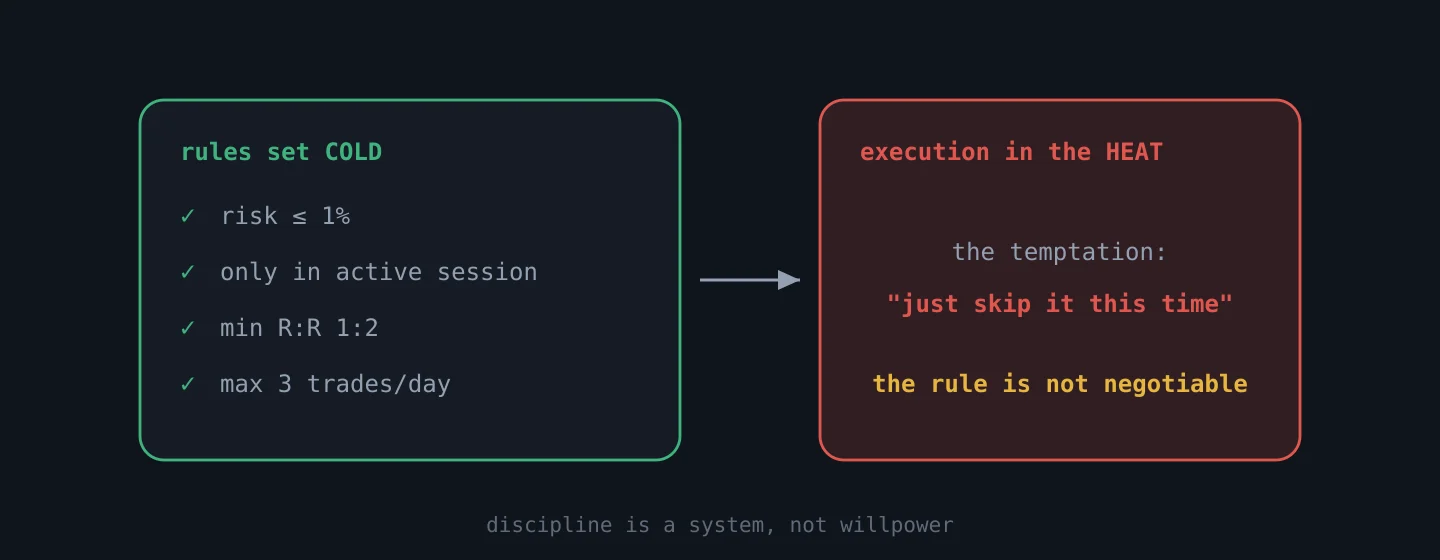
Why is discipline a system rather than willpower?
Willpower runs out; a system doesn't. Relying on "toughing it out" in the moment of the trade is the fast track to failure, because that's exactly when fear and greed shout loudest. The goal is to take decisions out of the heat of the moment: define your entry, stop, target and size before you open the position, and treat those rules as non-negotiable. The role of mindset in your results covers the why; here what matters is the how.
What breaks discipline in practice?
Failures almost always show up at the same moments:
- After a loss, when the urge to "win it back" with a revenge trade takes over.
- On a winning streak, when overconfidence inflates position size.
- In boredom, when there's no valid setup and you force an entry just to "do something".
- With FOMO, when price runs without you and you chase the candle.
Naming these triggers is the first step to seeing them coming.
How do you build it, step by step?
Discipline rests on structure, not motivation:
- A written plan with clear rules. If a trade doesn't meet the checklist, it isn't taken. No "just this once" exceptions.
- Decide before you feel. Each position's size is set in advance so no single outcome throws you off — this is where sound risk per trade protects your psychology as much as your capital.
- A trade journal with the emotion logged. Reviewing it weekly, you'll find your losses cluster around the same moods.
- Wait for the environment, don't force it. When an objective read like the Market Readiness Score flags poor conditions, sitting still stops being an act of willpower and becomes the logical choice.
- Judge yourself by the process, not the outcome. A losing trade that followed the plan is a good trade; an improvised winner is a bad habit that eventually sends the bill.
How does it differ for beginners and advanced traders?
The enemy changes with experience:
- The beginner loses to impulsiveness and to having no rules. The job is to build structure and follow the plan to the letter, even when it's boring. At first, discipline is obedience.
- The advanced trader knows the rules cold; the enemy is complacency. They skip the checklist "because I already know", size up after a hot streak, or over-optimize the system until it breaks. For the advanced trader, discipline is humility and consistency: doing the boring thing well, over and over.
Is discipline innate or trained?
Trained. Every trader still standing built it through repetition — it didn't come factory-installed. You don't need to overhaul your character overnight: pick a single rule you will never break and hold it until it's automatic. Everything else is built on top of that first rule.