The dollar smile: why does the dollar rise on both fear and strength?
This week the dollar fell on soft inflation, then jumped on war and a tech selloff — down on calm, up on fear. That isn't a contradiction; it's a shape called the dollar smile. Here's the framework, not just the news.

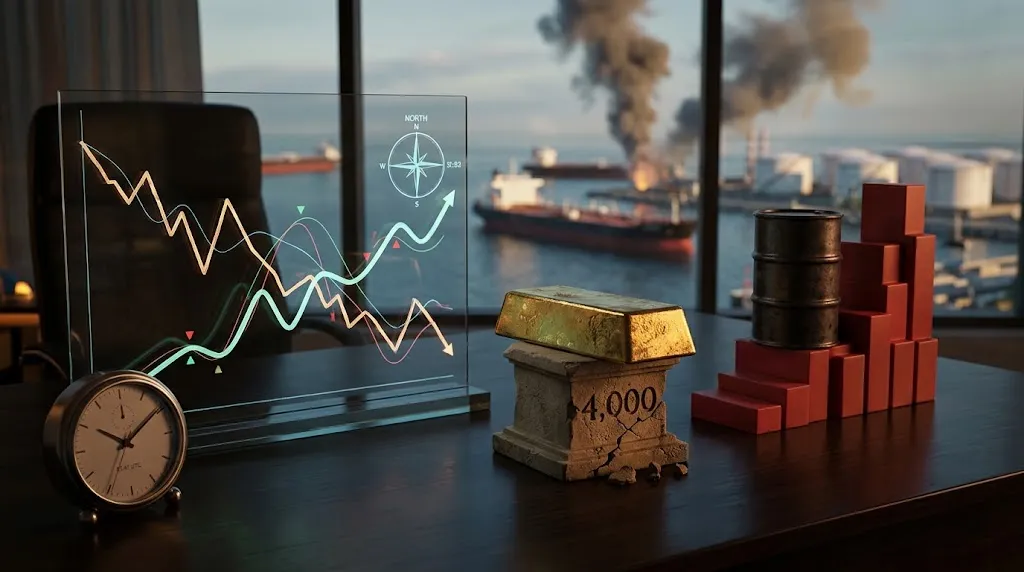
Earlier this week the US dollar was heading for a weekly loss. Softer US inflation had cooled bets on further tightening from the Federal Reserve, and the greenback drifted lower. Then missiles flew over Iran, the Strait of Hormuz was declared shut, and a tech-led selloff swept global stocks — and that same dollar snapped higher. Down on calm, up on fear. It looks like a contradiction. It isn't. It's a shape, and it has a name: the dollar smile.
What is the dollar smile?
The dollar smile is a framework coined by economist Stephen Jen to explain a pattern that confuses most beginners: the US dollar tends to strengthen at both extremes of the economic cycle and weaken in the middle. Picture a simple curve. The horizontal axis is the health of the US economy relative to the rest of the world — weak on the left, strong on the right. The vertical axis is dollar strength. Plot it, and the line curves up at both ends and sags in the centre. It smiles. The two corners of that smile are driven by completely different forces, which is exactly why the same currency can rise for opposite reasons.
Why does the dollar rise on the left side?
The left corner is fear. When a crisis hits — a war, a crash, a liquidity scare — capital stops chasing returns and hunts for safety, and the dollar is the world's number-one safe haven. It doesn't matter that the shock might hurt the US economy too; in a panic, investors sell risk and buy dollars to hold the deepest, most liquid asset on the planet. This is the corner the market jumped to this week: the Hormuz headlines flipped it into risk-off, and the dollar climbed even as US data stayed mixed.
Why does the dollar rise on the right side?
The right corner is strength. Here the dollar rises for the opposite reason: the US economy is outperforming, growth is hot, and interest rates — or the expectation of them — sit high relative to other major economies. Capital flows toward the currency that pays the most and grows the fastest. This is the yield-chasing dollar, the same force by which a hawkish Fed lifts the dollar and pressures gold. Fear on the left, greed on the right — both push the dollar up.
Where does the dollar actually fall?
The bottom of the smile is the mediocre middle. The US economy is soft but not in crisis: growth is slowing, the Fed is expected to cut rather than hike, and there's no global panic driving a flight to safety. With no fear bid and no yield advantage, the dollar sags. This is where it sat at the start of this week, when soft inflation tempered rate-hike bets and the greenback drifted toward a weekly loss — before geopolitics yanked it back up the left side.
From concept to trade
The smile turns a confusing tape into a single question: which part of the curve are we in? A dollar rising on a strong jobs report (right side) and a dollar rising on a war headline (left side) look identical on the chart but demand opposite trades in everything else — risk pairs, gold, the wider risk-off hierarchy. Before you fade or follow a dollar move, locate it on the smile: is this fear, strength, or malaise? That single read reframes the whole board — and it's the same market-readiness question every good macro trade starts from.