Is a robot from the MQL5 Market worth buying?
The MQL5 Market rules forbid promising profits and passing a backtest off as real trading, and they do not guarantee that any robot makes money. So what does a product page show, and where is the real trading? The questions to ask before paying.
You cannot tell from the product page, and the Market's own rules promise nothing on that: MetaQuotes does not guarantee the profitability of any robot and only checks that it does what the seller says it does. What you can do is read the page knowing what it can and cannot show, and look for the one piece of evidence the page can show you without simulating anything: trading on a real account.
What does MQL5 check before it publishes a robot?
The MQL5.com Market is the store, run by MetaQuotes, for MetaTrader 4 and MetaTrader 5 (MT5) programs; MetaQuotes is the company that develops the platform. Under its rules, a seller has to verify their identity with an official document, and their name is visible to everyone.
The product also goes through an automatic check before it is published. An MQL5.com article details what that looks for: technical errors such as trading without enough funds, invalid volumes, stops too close to the price, division by zero or excessive memory use. In other words, that the robot does not break. Whether it makes money is a different question, and the rules leave it out explicitly:
The Administration of the Market service does not guarantee the profitability of Expert Advisors (EAs, trading robots), as well as the correctness of calculations in custom technical indicators purchased through the Market service. The Administration of the Market service provides only a formal test of the Product, checking its conformity with the functionality stated by the Seller.
What can a product page not say?
The rules limit what a seller can write. A product may not guarantee, promise or hint at profits, whether in its name, logo, screenshots or description. Nor may it use superlatives, images of money, or awards or testimonials from brokers or other companies. And there is one prohibition that matters more than the rest:
present trading strategy backtest results as real trading results, whether expressly or implicitly
That does not mean a page shows no backtests. It means it cannot pass them off as money actually earned. Telling one from the other is still your job, and a rising curve that does not say where it comes from may well be the output of a simulator. The reason a report like that sells so well is what we covered in The robot is not sold for what it earns.
What does the trial version show you?
Market robots come with a demo version, and the rules set its limit: a demo robot cannot run on a live chart, and its trading part can only be tested in the Strategy Tester. A demo indicator can only be seen in visual testing mode.
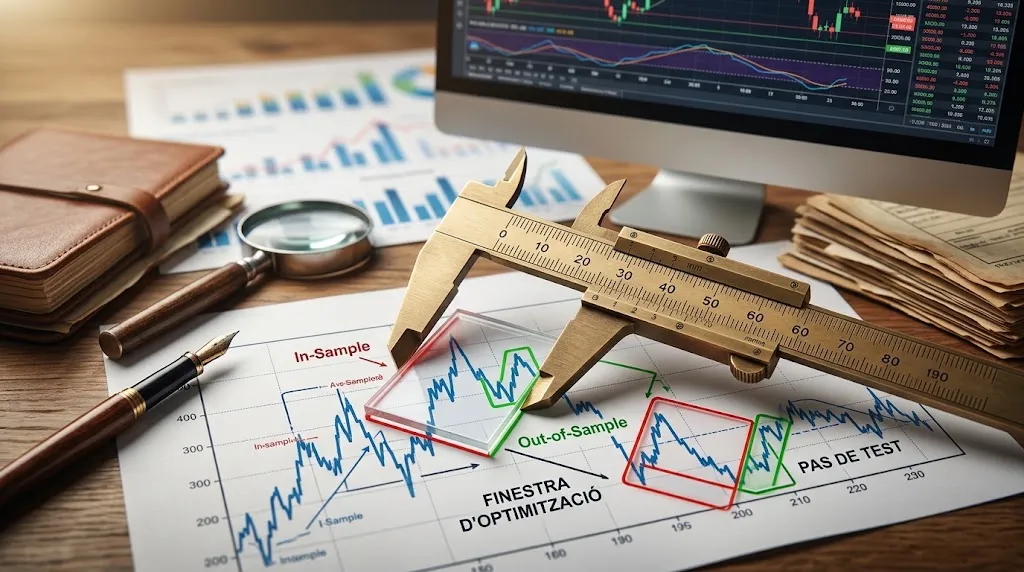
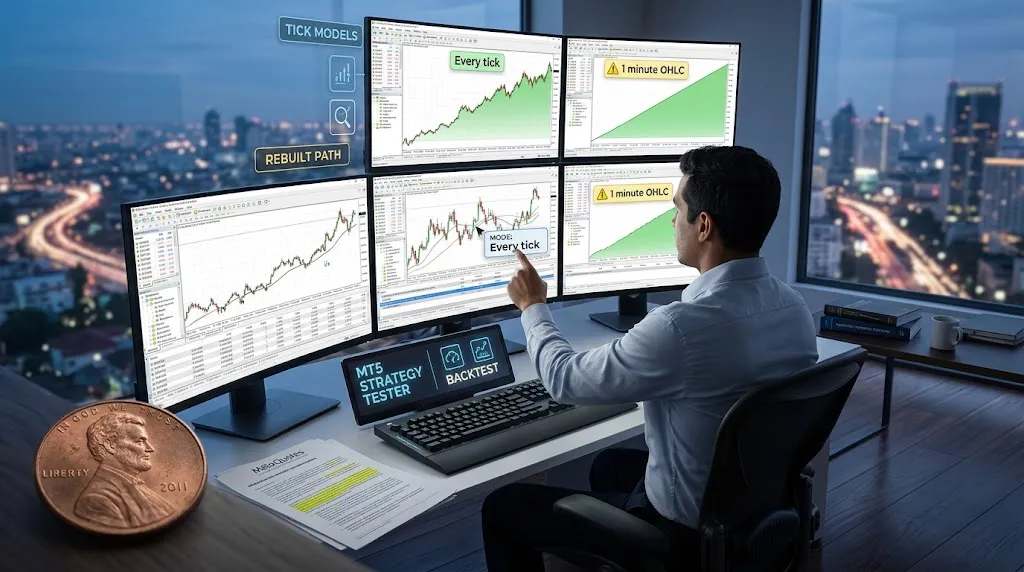
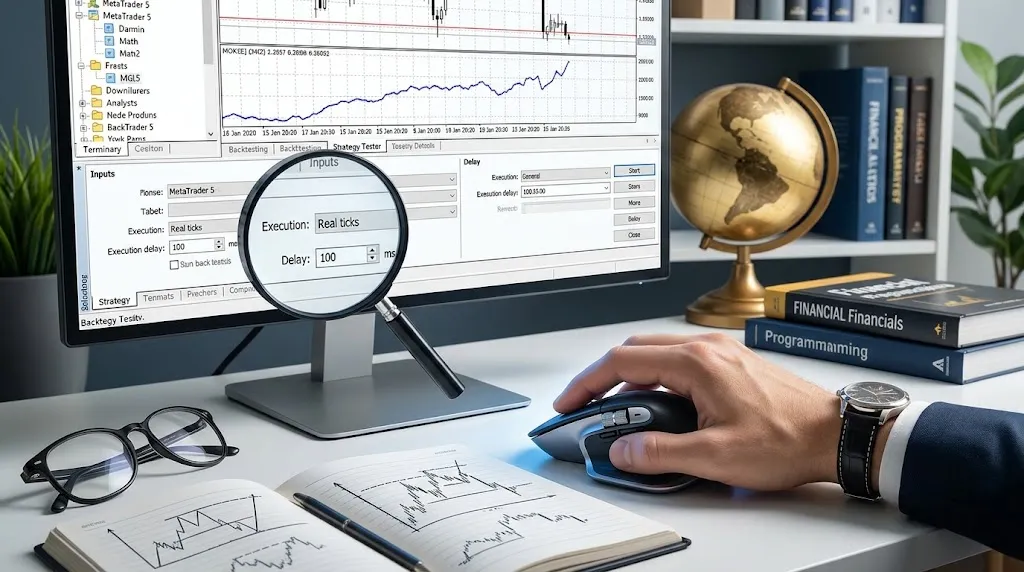
So the only way to try a robot before paying for it is the simulator. That test is worth what its assumptions are worth: the tick mode, the spread and, in MT5, the execution delay you choose. If you run it, run it yourself, on your own broker's data and in the most demanding mode the strategy allows, and remember that a brilliant result on the same period it was optimised on may be overfitting.
The rules also let a seller offer a one-month rental for a small fee. It is not mandatory, but where it exists it lets you see the robot outside the simulator without buying it.
Where is the real trading?
In the MQL5.com Signals service. It is the route the Market's own rules name for showing results: they allow a link to a signal that displays the product's monitoring. And the Signals rules set a strong condition: a signal can only be created on a real account, and signals on demo, contest or cent accounts are deleted automatically.
A page with a linked signal lets you see trades that happened in a real market. A page without one only shows you simulations or what the seller tells you.
A signal does not settle everything either:
- It is one account, one broker and one period. Another broker, another spread or another date can give another result.
- It guarantees nothing. The Signals rules say the administration does not guarantee their profitability.
- From the outside you cannot always check that the account runs the same robot, with the same settings, that you are being sold.
- Following a signal is copy trading, with incentives of its own, which we explained in In copy trading, not everyone is paid for being right.
Even so, it is the closest thing to forward testing you can see before paying.
What happens after you pay?
| What the rules say | What it means |
|---|---|
| A purchased product cannot be returned | The testing has to happen before |
| The minimum price of a paid product is $30 | No product sells for less |
| Between 5 and 20 activations, as set by the seller | Changing machine or reinstalling the OS uses another |
| Updates can change the declared functionality | The previous version is not kept for you |
| Fixes must be requested within a month of purchase | A generic "it does not work" is not considered |
| Only buyers or full free downloaders can review | A review may describe an old version |
The last row deserves one more line. Only letting people who used the full product review is a good safeguard, but a review describes the version that person used, at that time, and the seller may have changed the robot since.
What should you ask before paying?
- Does it have a linked signal on a real account, and how long has it been trading?
- Which tick mode and spread were the backtests in the screenshots run with, and which delay if they come from MT5?
- Is there any period that was not used to tune the parameters?
- Can you rent it for a month before buying it?
- How many activations does it give, and what happens if you change computers?
- When were the reviews written, and which version do they describe?
What this article does not tell you
It does not evaluate any robot or any seller, and it does not tell you whether a particular product is worth it. It quotes the Market and Signals rules as published on September 16, 2026, and those rules can change.
Nor is it advice. The Signals rules themselves describe MetaQuotes as a technology provider that does not give financial advice, and the decision to buy, like the decision to copy, is yours. What it does give you is the order of the questions: first what the page cannot promise you, and then the one thing it can show you without simulating anything.