Paul Tudor Jones: the trader who saw Black Monday coming
In October 1987 the Dow fell 22.6% in a single day. One fund returned 62% that month — and the reason was a chart from 1929.
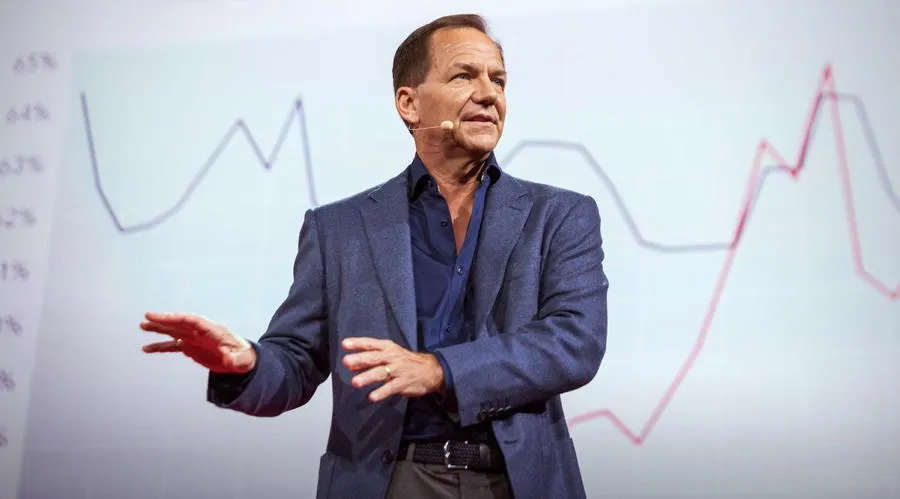
On 19 October 1987 the Dow Jones Industrial Average lost 22.6% of its value in one session. It is still the largest single-day percentage fall in the index's history. That same month, a young trader's fund reportedly returned 62% — not because he guessed, but because he had spent the year staring at a chart of 1929 and refusing to look away.
The chart that called it
The idea did not start with Paul Tudor Jones. It started with his research partner, Peter Borish, who laid the 1980s market on top of the 1920s one and found the two tracked each other closely. That overlay had no predictive power in a statistical sense — it was an analogy, not a model. But it did something more useful: it made a crash thinkable at a moment when almost nobody was positioned for one, and it gave the desk a map of what to watch for.
The trade behind the legend
Being early is how traders die. Jones was famously flexible about direction — he ran short, got stopped, re-entered — and what carried him through was not conviction but the size he was willing to lose on each attempt. This is the unglamorous part of the story: the analog told him what might happen, and his risk per trade decided whether he would still be solvent when it did.
What the numbers actually say
The Tudor Futures Fund is reported to have returned around 62% in October 1987 and roughly 125.9% for the full year. Treat those as widely-repeated industry figures rather than audited ones — but the shape is what matters. A trader made his career in the month the market had its worst day, which is only possible if you can still act when everyone else is frozen. Jones later became one of the traders profiled in Jack Schwager's Market Wizards, and the 1929 analog became part of trading folklore.
What it teaches you
Not "learn to predict crashes" — you cannot, and Jones did not, really. The transferable part is the pairing: a thesis about what could happen, plus a position small enough that being wrong three times still leaves you able to be right on the fourth. That is the same arithmetic behind sizing with ATR, which lets volatility set your size instead of your optimism. Sixty years earlier Jesse Livermore shorted the crash the analog was drawn from — and lost it all afterwards, for exactly the reason Jones did not.
To see how this story compares with the other ten, read our guide to the biggest trades in history.
This is historical storytelling, not investment advice. Past returns — especially other people's — guarantee nothing.