

Pair Anatomy
10 articles
What drives each currency pair? What hours is it genuinely alive, and how much does it actually move? One pair per entry, measured against our own price history.
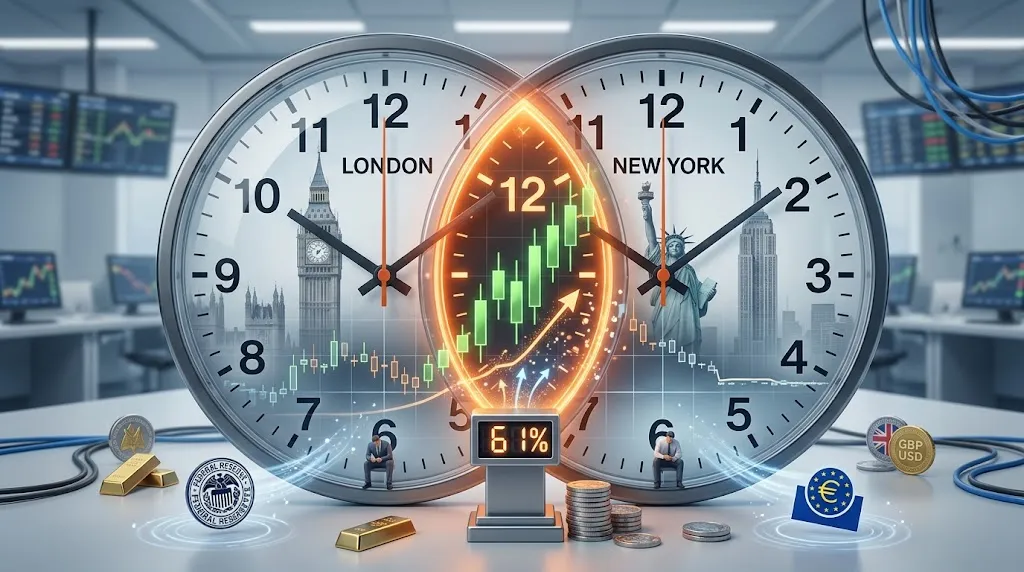
EUR/USD: how much does it move, when, and what moves it?
A 64-pip median day, 61% of the range inside four hours, and a 0.80 correlation with GBP/USD. Measured on 521 days of our own price history.

USD/JPY: how much does it move, when, and what moves it?
The only pair in the series with two peak hours: at 00:00 UTC it delivers 96% of its best hour. A 112-pip median, measured on 521 days of our own data.

GBP/USD: how much does it move, when, and what moves it?
An 80-pip median day and only 5% of sessions under 40. The same clock as EUR/USD, turned up. Measured on 521 days of our own price history.

USD/CHF: how much does it move, when, and what moves it?
The calmest of the five majors: a 53-pip median and 24% of days under 40. Its −0.83 against EUR/USD is the strongest inverse relationship in the series.

USD/CAD: how much does it move, when, and what moves it?
The most uneven day in the series: a best hour worth 3.5 times the worst, and 67% of the range inside four hours. The only major with both currencies in one time zone.
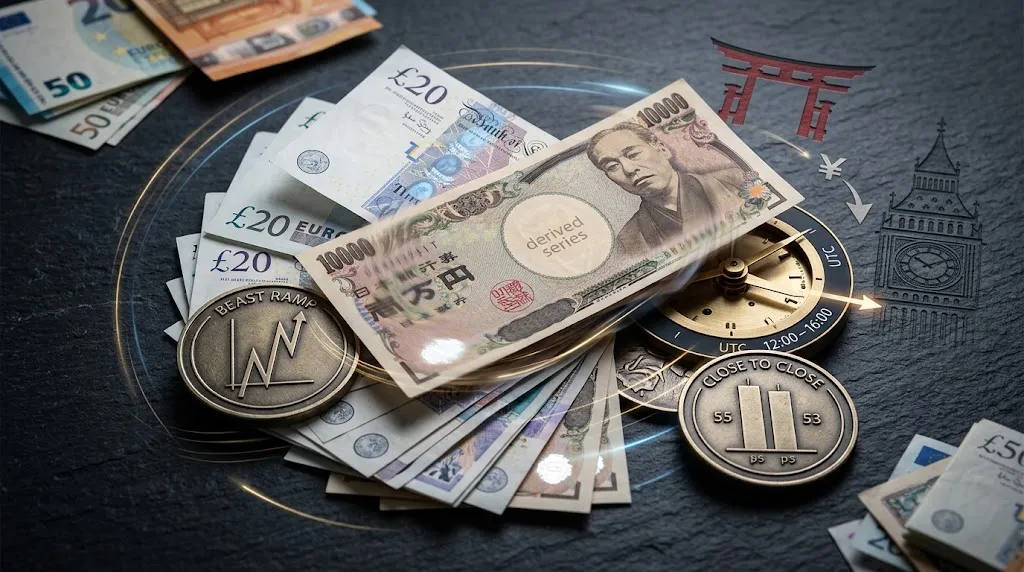
GBP/JPY: how much does it move, when, and what moves it?
Close to close it moves 55 pips against USD/JPY's 53. The beast reputation is intraday range, not displacement. A derived series, and we say so.

Gold (XAU/USD): how much does it move, when, and what moves it?
A $91 median day, 56% of the range in the London–New York overlap and a second peak in Asia. Measured on 130 days of our own price history.

Silver (XAG/USD): how much does it move, when, and what moves it?
A $2.73 median day, almost twice gold as a percentage, and a "normal" that is still falling. Measured on 130 days of our own price history.

AUD/USD: how much does it move, when, and what moves it?
A 51-pip median day, an Asian morning busier than the London open, and a 0.89 correlation with NZD/USD. Measured on 521 days of our own price history.

NZD/USD: how much does it move, when, and what moves it?
The calmest of seven major pairs in pips (48 a day) and the most volatile in percent (0.81% of its price). Measured on 521 days of our own price history.

