Should you share your trading strategy with an AI?
When you paste your strategy, journal or positions into a cloud AI, that data leaves your computer and lives on someone else’s servers. Here is what actually happens to it — and when to use a local model instead.

Be careful what you paste. When you drop your strategy, journal or open positions into a cloud AI, that data leaves your computer and lives on someone else's servers — where it may be logged, used to improve the model, or exposed in a breach. A local model keeps everything on your machine but is weaker; the right choice depends on how sensitive the data is.

Why does it matter for a forex trader?
Your edge is information, and your strategy is the most valuable information you own. Traders now paste entire systems, trade logs and live positions into a chatbot to get feedback — often without thinking about where that text goes. It is not paranoia: it is the same instinct that stops you from emailing your broker password. Knowing what actually happens to the data lets you use AI freely for the generic work and hold back the parts that are genuinely yours.
How does it actually work?
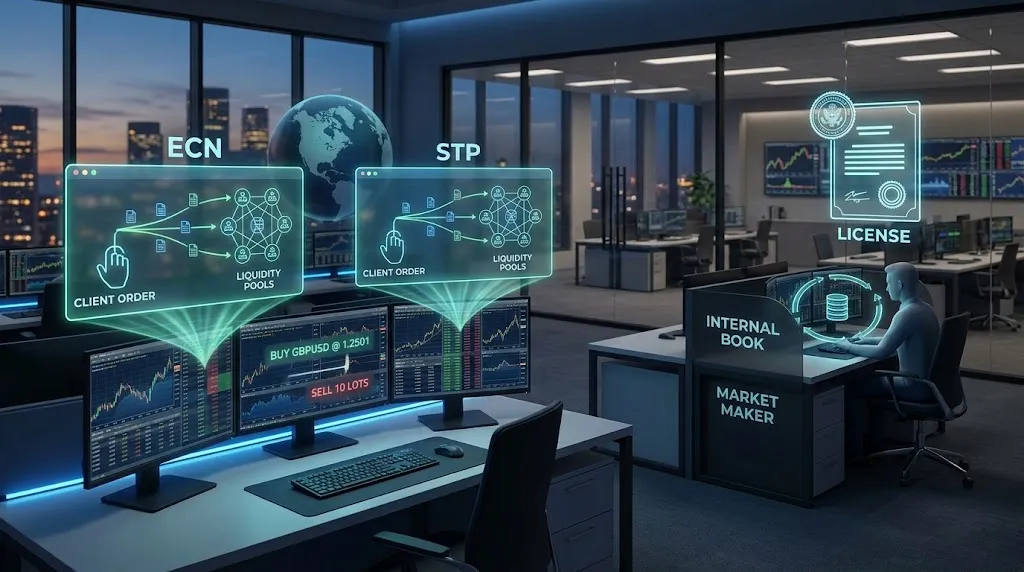
There are two broad options. A cloud AI (ChatGPT, Claude, Gemini and most tools built on them) runs on a provider's servers: your prompt travels over the internet, and depending on the product and its settings it may be retained, reviewed, or used for training. A local model runs entirely on your own computer: nothing leaves the machine, but it is smaller, slower and less capable than the frontier cloud models. Most traders are best served by a simple rule — use the cloud for anything generic (explaining a concept, drafting, summarising a public report) and keep the sensitive, identifying details out of the prompt.
What are the limits you must respect?
Never paste secrets: broker credentials, API keys, account numbers, or your exact live positions and stops. Assume anything you send to a cloud tool could, in a worst case, be seen by someone else — so anonymise it. Strip names and numbers; describe the setup in general terms instead of pasting the real thing. Remember that an AI is also not a private oracle you should trust blindly: the quality of the answer still depends on how you prompt it, and a confident answer built on your leaked data is still just a pattern-match. Your trade journal in particular is a record of your real behaviour — treat it like private financial data, because it is.
Is it safe to use ChatGPT for trading ideas?
For generic learning and structuring, yes — it is a strong study assistant. The risk is not the questions you ask; it is the private data you attach to them. Keep the conversation at the level of concepts and public information, and a cloud AI is a useful, low-risk tool. Attach your live account and it becomes a data-privacy question, not a trading one.
When should you use a local AI instead?
When the data is genuinely sensitive and you cannot anonymise it — a full proprietary strategy, a complete trade history, anything tied to your identity or capital. A local model trades capability for privacy: it will not be as sharp as the best cloud model, but nothing leaves your machine. For everything else, cloud with sensible redaction is the practical default.