Can fake news and deepfakes move the forex market?
AI can generate convincing fake headlines, images and audio, and markets react in milliseconds — so a fake can spike a currency for minutes before it is debunked. Chasing that spike is the trap.

Yes — for minutes. AI can now generate convincing fake headlines, images and audio, and markets react to headlines in milliseconds, so a well-timed fake can spike a currency before anyone verifies it. The move almost always reverses once the fake is debunked, which is exactly why chasing it is the trap.

Why does it matter for a forex trader?
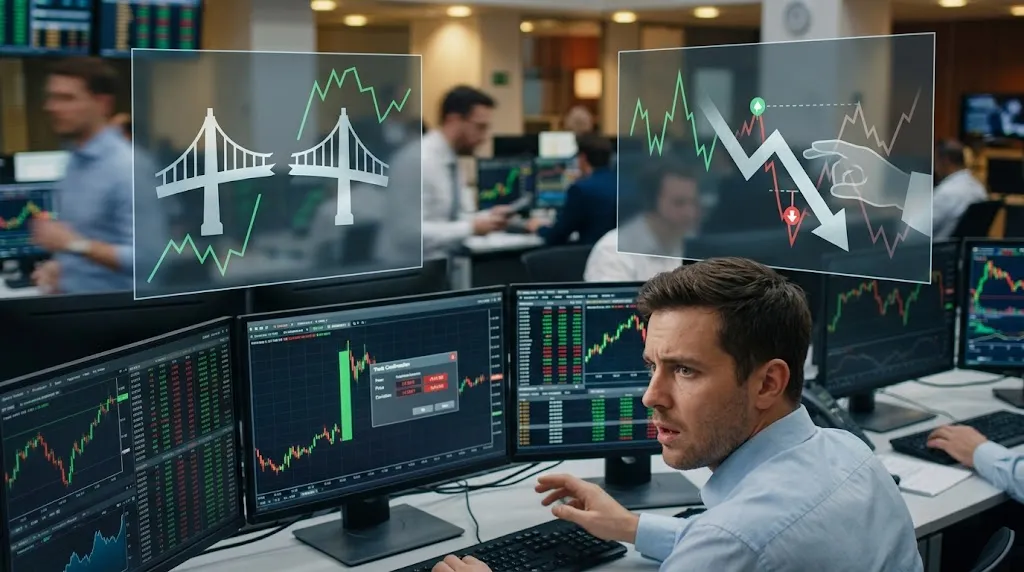
The forex market runs on information, and that information is now cheaper to fake than ever. A single fabricated headline — a fake central-bank statement, a fake conflict, a fake resignation — can trigger a wave of automated and panic selling before the truth catches up. As a beginner, the risk is not that you get "hacked"; it is that you react to a fake at the worst possible moment: buying the spike or selling the dip that snaps back seconds later. Knowing this is happening changes how you treat any shocking, unverified headline.
How does it actually work?
Most fast market reactions are not thoughtful — they are mechanical. News algorithms scan headlines and social feeds and fire orders in milliseconds; human traders then pile in on the move. A convincing fake exploits that reflex. In May 2023, an AI-generated image of an explosion near the Pentagon spread through verified-looking accounts and briefly pushed the S&P 500 down about half a percent before it was debunked and prices recovered within minutes. In forex, the same mechanism applies to a fake tariff announcement or a deepfaked official: the pair gaps, stops get hit (and liquidity gets swept), and then it unwinds. The fake does not need to be believed for long — it only needs to move price for seconds.
What are the limits you must respect?
You cannot out-react an algorithm, so do not try. Treat any single, shocking, market-moving headline as unverified until a primary source confirms it — the central bank's own site, the official wire, the actual filing. Be most suspicious exactly when a headline is designed to make you feel fear or euphoria, because that is when sentiment (fear and greed) is easiest to weaponise. If you trade the news, the discipline is the same as always: assume the first spike can be noise, size for it, and never move your stop into a move you cannot explain.
How can you tell real news from a fake?
Check the source, not the screenshot. A real market-moving event has a primary origin you can reach in one click — an official statement, a scheduled release, a reputable wire carrying it too. A fake usually lives only as a forwarded image or a lone account, has no primary source, and often arrives with urgency ("BREAKING", "act now"). If you cannot trace it to the source in seconds, assume it is noise and let the move happen without you.
Will AI make market manipulation worse?
Almost certainly more frequent and more convincing — deepfaked audio and video are getting cheaper and better. But the defence does not change: markets still snap back to the truth, and a trader who waits for confirmation is protected from the reversal that punishes everyone who chased the fake. The edge is patience, not speed.