

Smart Money Concepts (SMC)
18 articles
Learn Smart Money Concepts (SMC): market structure (BOS & CHoCH), order blocks, fair value gaps, supply & demand zones and ICT, explained step by step to read the footprint of institutional money.

What is Smart Money Concepts (SMC)?
Smart Money Concepts (SMC) is a discretionary price-action framework popularised online, reframing classic support/resistance as zones where large institutional 'smart money'…

What is liquidity in forex?
Liquidity is how easily you can trade without moving the price — the hidden force behind your spread, your slippage, and even where price is drawn.

What is BOS and CHoCH in trading? (market structure explained)
Market structure, in Smart Money Concepts (SMC), maps price's directional flow via swing highs and lows: an uptrend prints higher highs and higher lows; a downtrend, lower highs…

What are supply and demand zones?
Supply and demand zones are specific price areas on a chart where past institutional order flow created a sharp, imbalanced move, marking locations where buying or selling…

What is an order block?
An order block (OB) is the last opposing candle or candle cluster before an impulsive price move that breaks market structure, marking a specific zone where institutions likely…

What is a Fair Value Gap (FVG)?
A Fair Value Gap (FVG) is one type of imbalance: a three-candle pattern where rapid price movement leaves an unfilled space on the chart. This gap, between the wick of…

What is a mitigation block?
A mitigation block is an order block that failed without a liquidity sweep: price fell short of the previous extreme, then broke structure the other way. How to spot it.

What are premium and discount (and OTE)?
Premium and discount zones divide a price range based on its 50% equilibrium, indicating whether an asset is considered expensive or cheap, respectively, by SMC traders who aim to…

What is inducement in trading?
Inducement is a smaller, obvious high or low that lures traders to enter early and place stops, creating liquidity for price to grab before moving to the true zone, often sitting…

How do you tell where the market accepts or rejects price?
Volume profile shows you where trade actually happened, not just where price went — the fat parts of the profile are prices the market accepted, and the thin parts are prices it…

What is market fractality and multi-timeframe analysis?
The chart looks like itself at every scale: a daily candle is a whole trend on the 5-minute. What is market fractality, and how do you use it to read multiple timeframes?

What is ICT (Inner Circle Trader)?
ICT refers to the educational material of Michael J. Huddleston ('The Inner Circle Trader'), a specific school within the broader SMC / price-action world that popularised terms…

What is the Market Maker Model (AMD)?
The Market Maker Model, sometimes called the AMD cycle or the "Power of 3", is a conceptual narrative explaining how large institutional players often move price through three…

Does SMC actually work? What can it claim, and what can't it?
SMC describes real things on a chart, but cannot prove the story it tells about them. What can the framework honestly claim, what can't it claim, and how much of it is genuinely new?

Order block vs supply and demand zone vs support and resistance: what really separates them
The three vocabularies often mark the same rectangle. Where they genuinely differ is the evidence each one demands before you draw it — and that part is checkable on any chart.

FVG vs imbalance vs liquidity void: what separates them and what our data shows
An FVG is one type of imbalance and a liquidity void can contain several. What separates them, and how often FVGs and voids really get filled on five years of hourly data.
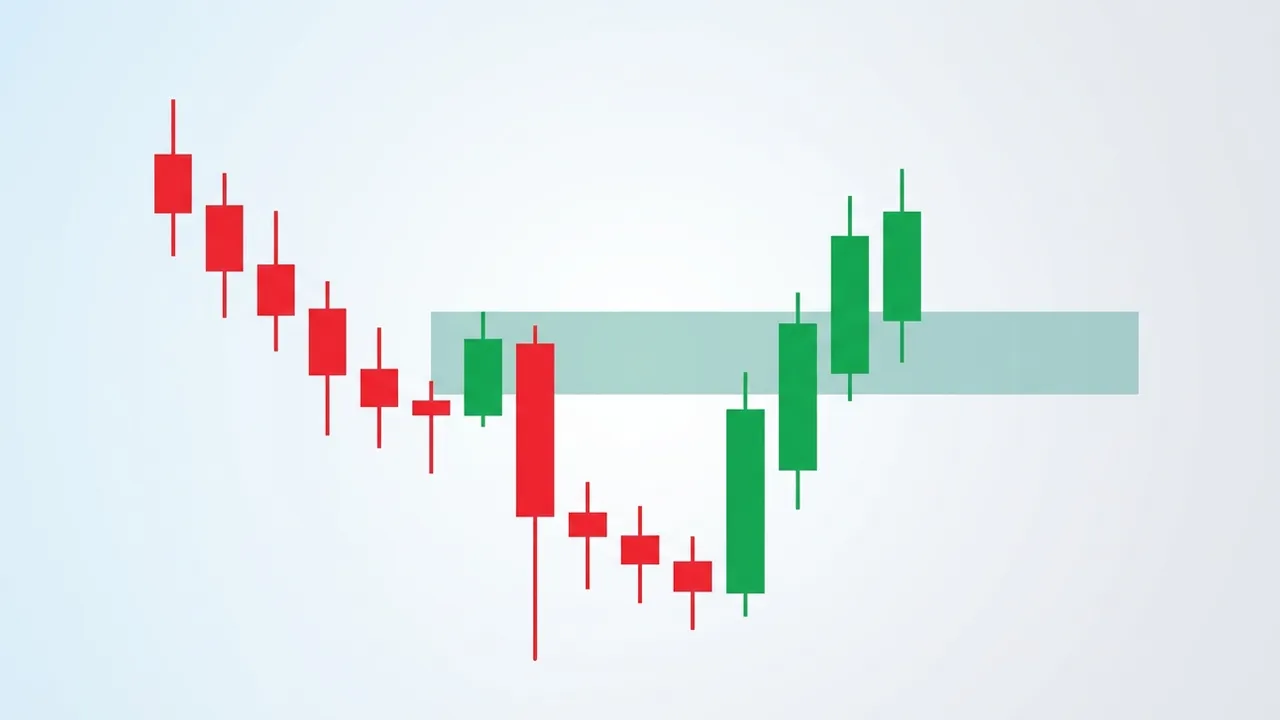
Order block vs breaker block vs mitigation block: does the sweep matter?
One candle, three outcomes: an order block holds, fails after a liquidity sweep or fails without one. What separates them, and whether the sweep matters in our data.

Inducement vs liquidity sweep vs stop hunt: is it the same move?
Inducement is the level, a sweep the event, a stop hunt the story. In five years of our data, price took yesterday's high in half of all sessions and came back in half of those.

