
Education· page 2
195 articles
Is a robot from the MQL5 Market worth buying?
The MQL5 Market rules forbid promising profits and passing a backtest off as real trading, and they do not guarantee that any robot makes money. So what does a product page show, and where is the real trading? The questions to ask before paying.
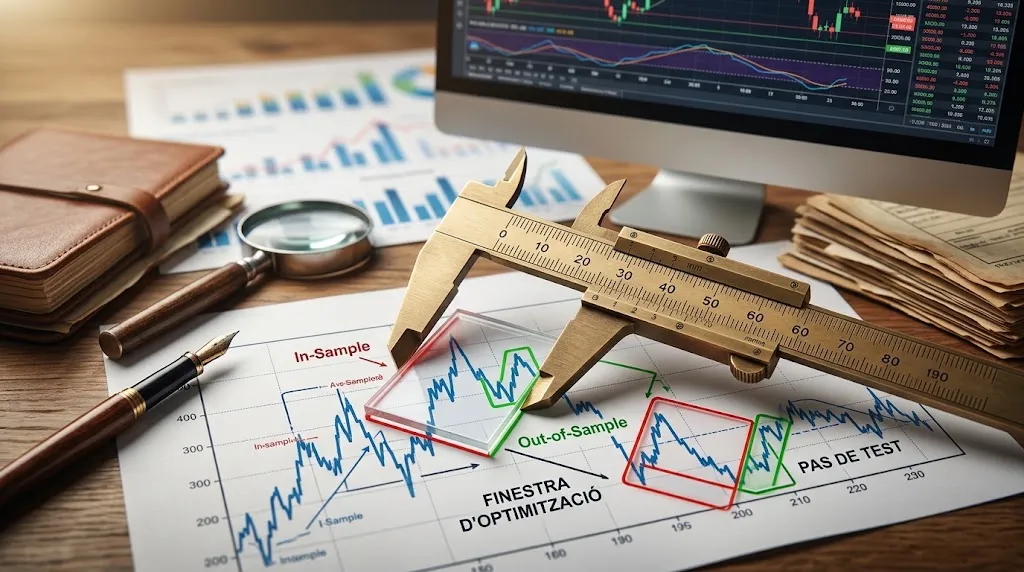
What is walk-forward, and why is it more honest than a single optimisation?
Optimising picks the parameters that did best in the past; walk-forward tests them on data they have not seen, stretch by stretch. What does MT5 ship with? What to look at when it is done, what the method does not fix, and what to ask of a report.
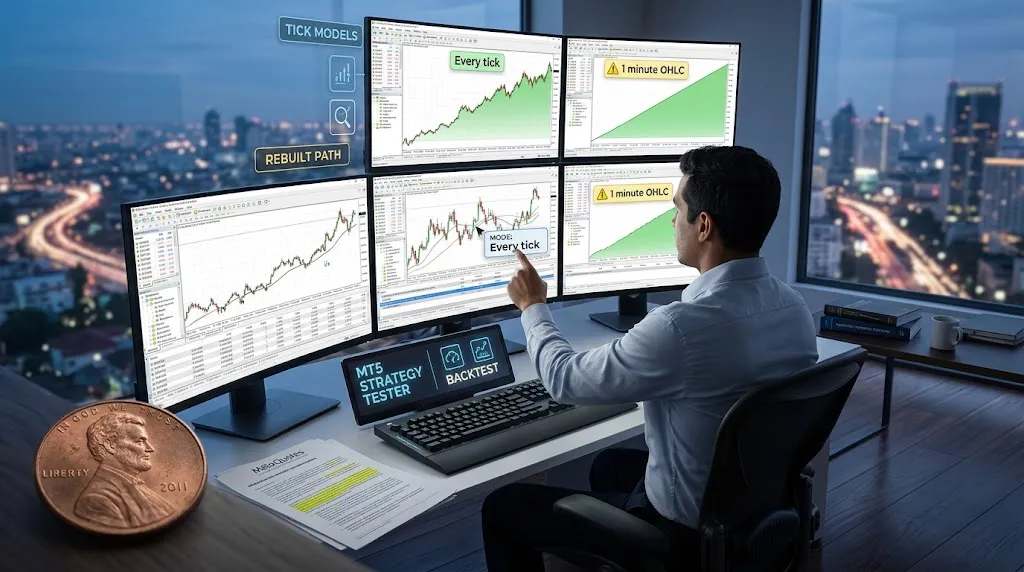
Which tick model did that backtest use, and why does it change the result?
MetaQuotes' own documentation explains how its "1 minute OHLC" mode can manufacture a "Testing Grail". What does the robot see in each mode? The mode worth asking for, depending on the strategy, and a robot published in 2011 that still proves it.
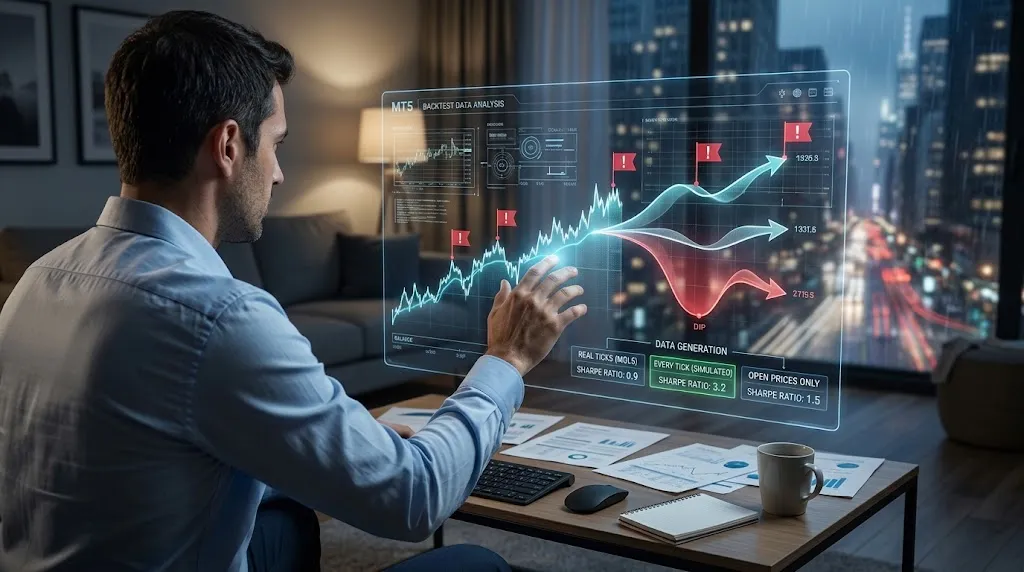
What does the MT5 Strategy Tester actually do when you hit Start?
Outside real-ticks mode, the MT5 simulator rebuilds ticks from each bar, takes the spread from history and can fill orders in "ideal" conditions. What does each report assume? The five questions to ask before you believe it.
The trading course does not live on trading
Whoever teaches is paid from three places and only one requires being right. The least visible is the broker rebate on every lot you trade, win or lose. What the market abuse regulation requires, what Spain's CNMV measured in April 2026, and our own position declared.
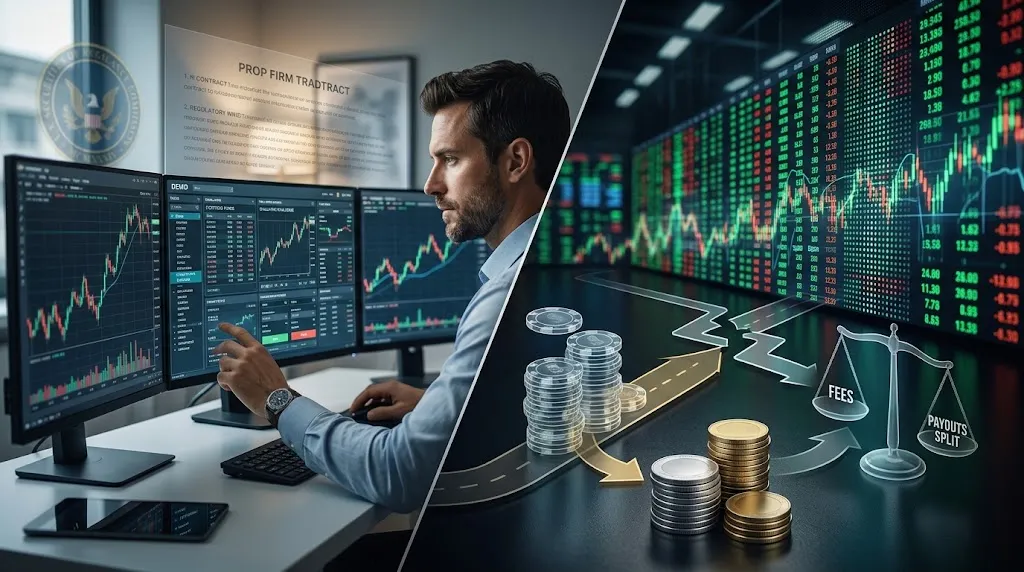
The prop firm evaluates you in a simulation, and it says so itself
"All accounts are demo with fictitious funds and any trading is in a simulated environment": the firms publish it themselves. What does that change, where does their revenue come from, and why did the CFTC case everyone cites end dismissed with costs against the regulator?
The signal group is paid for your volume, not for being right
A free channel does not mean nobody is paid: an introducing broker programme rebates part of the spread on every trade you execute, win or lose. What separates it from copy trading, and why has the record you see been selected? And what the FCA is prosecuting.
The robot is not sold for what it earns, but for what it shows
The product page carries a flawless curve and a "modelling quality 90%". MetaTrader's own help says that even in its most precise mode the ticks are generated by interpolation. What does that 90% measure? The two costs the simulation never saw, and the five things to ask for before paying.

The welcome bonus is charged back to you in spread
A 100% bonus cannot be withdrawn until you trade a set volume, and that volume is paid in spread. Break-even sits at 62.5 EUR/USD lots. What did ESMA write when it banned them in 2018, and why is the real cost the condition rather than the balance?

Your CFD broker is the counterparty, and that is not the problem
A CFD is a bilateral contract: no exchange, no third party on the other side. What decides whether their interests clash with yours is not that, but whether they hedge the exposure. What ESMA wrote, and the number the broker publishes on its own front page.

In copy trading, not everyone is paid for being right
The trader you copy is paid in two very different ways: on performance, and on the volume your account generates whether they are right or wrong. What ESMA asked supervisors to check in 2023, and the question that orders all the others.

Synthetic indices are not the market
Its issuer writes that a random number generator produces them and that news does not affect the price. What is left of technical analysis, why the arithmetic is negative-sum, and why "Volatility 75" has nothing to do with the VIX.

Binary options lose money by design
At an 80% payout, expectancy is −10% per trade and you would need a 55.6% win rate just to break even. What ESMA, the FCA and the CNMV ruled, and why the 74-89% everyone quotes is not about binaries.
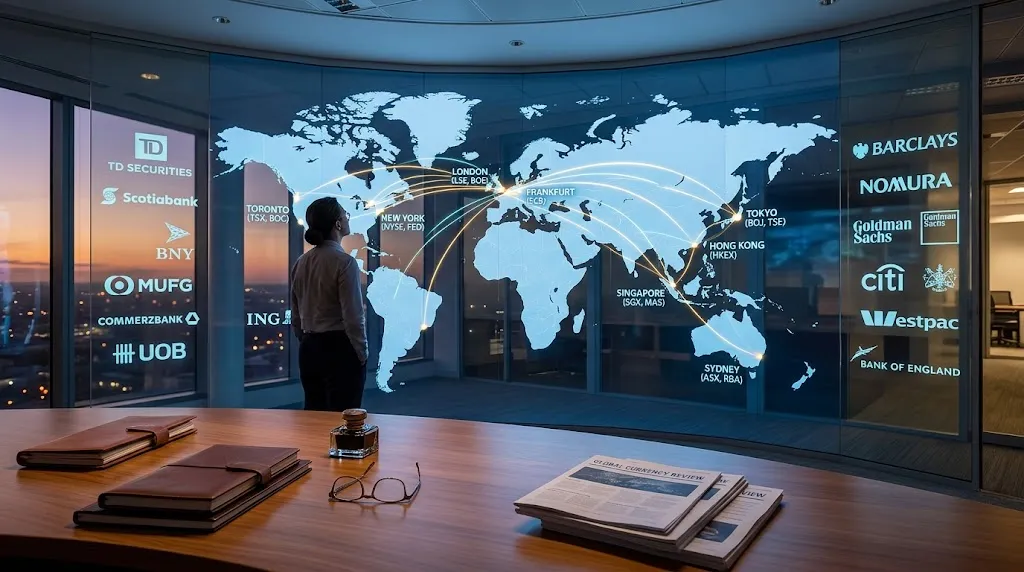
Who writes the forex analysis you read every day?
The daily roundups quote 21 banks and research houses. Who is each one, where is it from, and why does it have a view on that currency and not another?
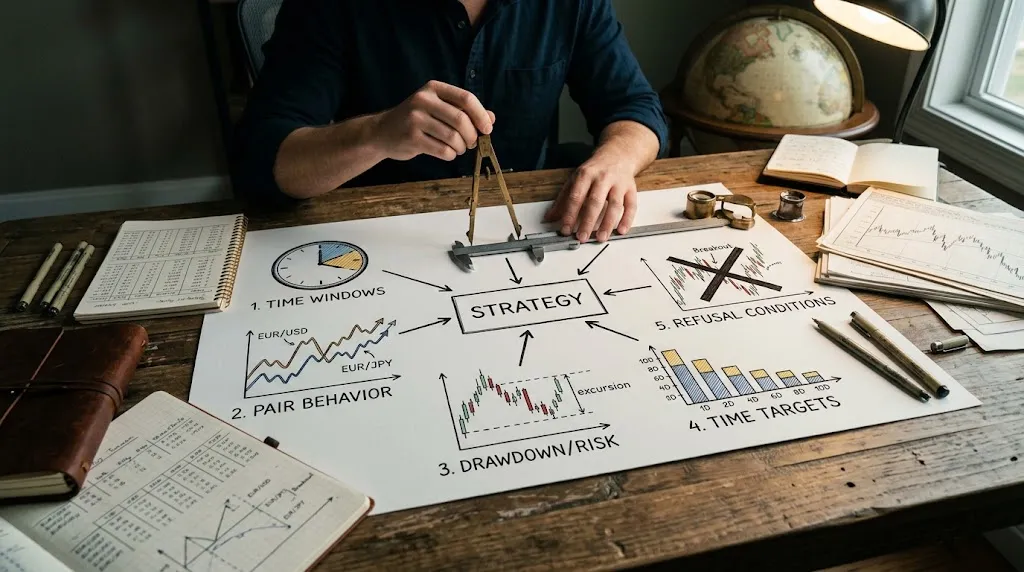
What if you built your strategy backwards?
Five measurements from the series plus a new table: how many pips each time window actually offers across ten pairs. Not the strategy — the floor.
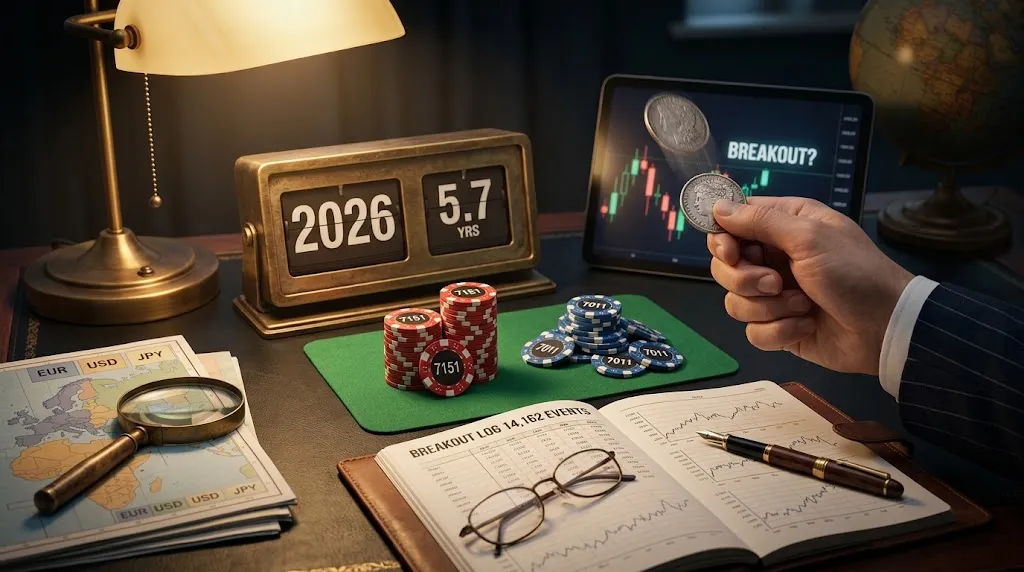
How many breakouts actually continue?
Of 14,162 breaks of the previous day's extreme, 50.1% closed outside and 49.9% came back inside. Measured across ten pairs and 5.7 years: the break alone is a coin flip.

How often does price go nowhere?
Half of all days close inside the previous day's range, but only 14.1% stay entirely inside. Measured across ten pairs and 5.7 years: that gap is the whole range-trading style.

How much do you sit through before a trend pays?
To collect the median three-month move, price went against you by a median of 62% of that move first. Measured across almost 14,000 windows of 60 business days.

