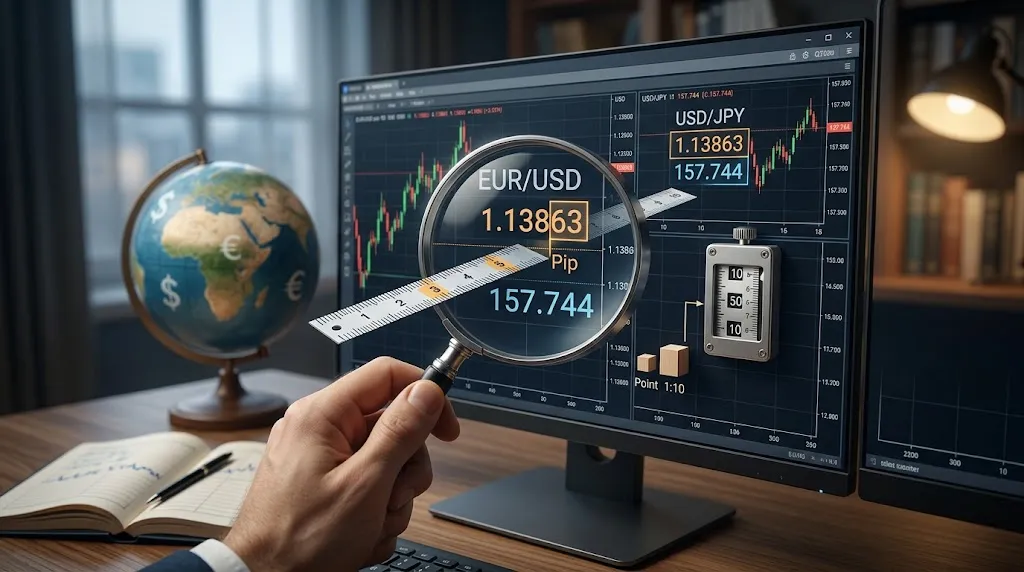
Volatility in Forex: Why ATR and Timing Beat Predicting Direction?
Most traders obsess over direction. Professionals obsess over volatility — because position size, stop placement, and whether a setup is even worth taking all depend on how much the market is actually moving.

Ask a new trader what matters and they'll say direction: up or down. Ask a professional and they'll talk about something else first — volatility, the size of the moves, not their direction. You can be right about where price is going and still lose if you size the trade wrong, place your stop too tight for current conditions, or take a setup in a market that simply isn't moving enough to reach your target.
What Volatility Really Tells You?
Volatility is the market's energy level. High volatility means large candles, fast moves, and real opportunity — but also real risk: a stop that was safe yesterday can get hit in minutes today. Low volatility means tight ranges, slow grinds, and breakouts that fizzle. The same strategy can be a winner in one regime and a loser in the other. Identifying the regime comes first.
ATR: The Standard Measure
The Average True Range (ATR) is the most widely used volatility gauge. It measures the average size of a pair's moves over a recent period — not where price went, just how far it traveled. Its uses are practical:
- Stop placement — set stops as a multiple of ATR so they breathe with current conditions, instead of a fixed pip value that's too tight in a storm or too loose in a calm.
- Position sizing — when ATR is high, size down; when it's low, you can size up for the same risk.
- Setup filtering — if a target requires a move larger than the pair typically makes in a session, the trade may simply not have room to work.
Volatility Has a Schedule
Crucially, volatility isn't random — it clusters around sessions and events. The London–New York overlap and major economic releases (rate decisions, CPI, jobs data) are when range expands. The late Asian session is when it contracts. Timing your entries to when energy is actually present is half the battle.
Putting It Together
Volatility, the active session, and the day's scheduled news are the three inputs that decide whether a market is worth trading at all. Read together, they answer a question most traders skip: is the market even awake right now? A flat, low-ATR pair in a dead session is not a chart to force a trade on — it's a signal to wait. Measuring readiness before hunting direction is what separates patient traders from frustrated ones.
Direction is a guess. Volatility is a measurement. Trade the measurement.