
Education· page 3
195 articles

How much does price move if you hold for a week?
Holding ten days instead of one doesn't multiply the move by ten, but by 3.3. Measured across ten pairs and 5.7 years, together with the real size of the weekend gap.
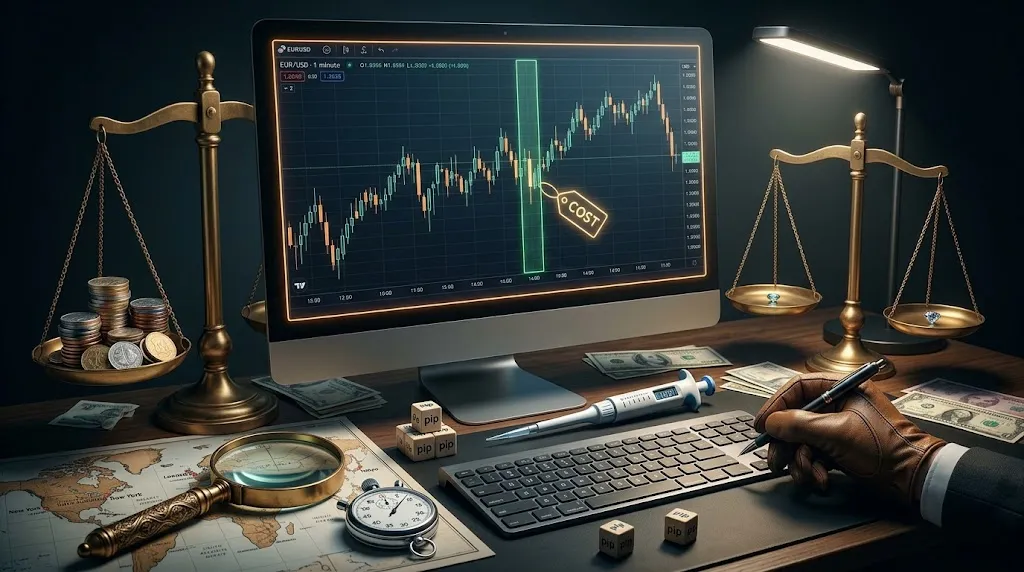
How much does price move in one minute?
EUR/USD's median one-minute candle measures 1.30 pips, and 38.5% of minutes don't reach one. Measured across five pairs and 225,000 candles per pair: how much material the market leaves a scalper.

What does trading the news demand?
In the NFP hour the candle widens by a median of 2.35 times, across 469 cases. Trading the news does not ask for your time: it asks you to stomach your risk doubling in the release hour.

What hours do you actually need to trade intraday?
Between midnight and eight in the morning New York time, the day has already travelled a median 61.7% of its range. Measured across ten pairs and 5.7 years: day trading does not ask you for hours, it asks for particular ones.

What is a currency pair?
A forex price isn't the price of a currency, it's the price of an exchange: you buy one by paying with another. Which is why you can be right about the euro and still lose money.

How do you choose a forex broker?
Not which one, but the order they get eliminated in. Nearly every comparison ranks by what matters least and leaves the one binary question for last.

Is forex trading legal?
Almost always yes, but the question points at the wrong thing: what’s regulated isn’t you exchanging currencies, it’s who may offer you the service. Checkable in a public register in ten minutes.

Is my money safe with a forex broker?
Against the broker failing, yes — and you can check it yourself in a public register before you deposit. Against the risk that actually empties accounts, no regulator covers you.
Can you lose more than you deposited in forex?
Usually not: your broker closes your positions before the account hits zero. But closing needs a price to close at, and there’s one known case where there isn’t one.

Is forex profitable, or is it a scam?
Two questions wearing one coat. The market is real and supervised; the fraud lives in what gets sold on top. And profitability has a measured answer — uncomfortable, and no mystery.

What is forex and how does it work?
It isn’t a market the way a stock exchange is: no building, no central order book, and your counterparty is usually your own broker. Nearly every odd thing you meet early on follows from that.
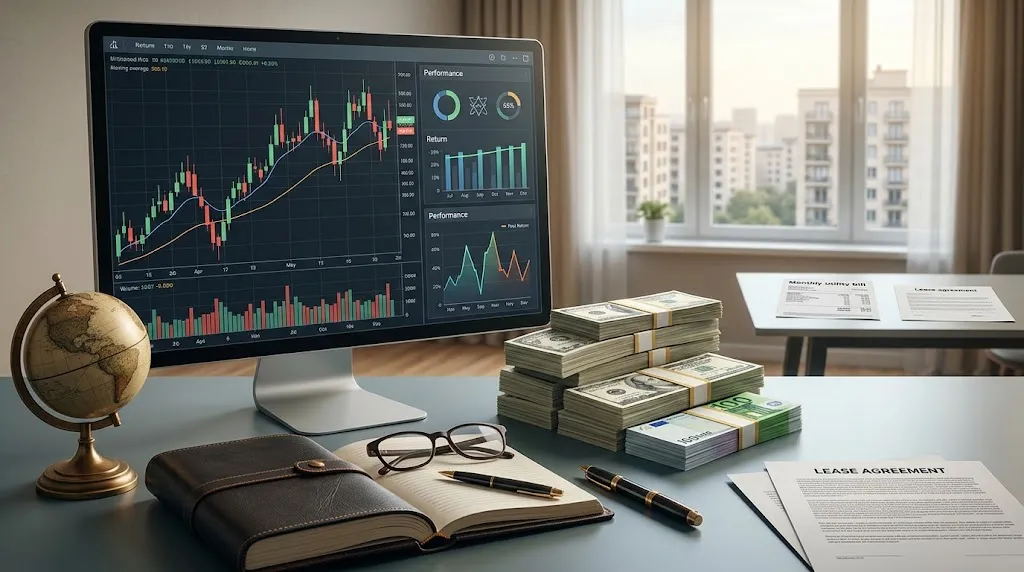
Can you make a living from trading?
Yes, and very few people do — but not for lack of skill. It’s a capital and variance problem: the income changes every month and the rent never does.
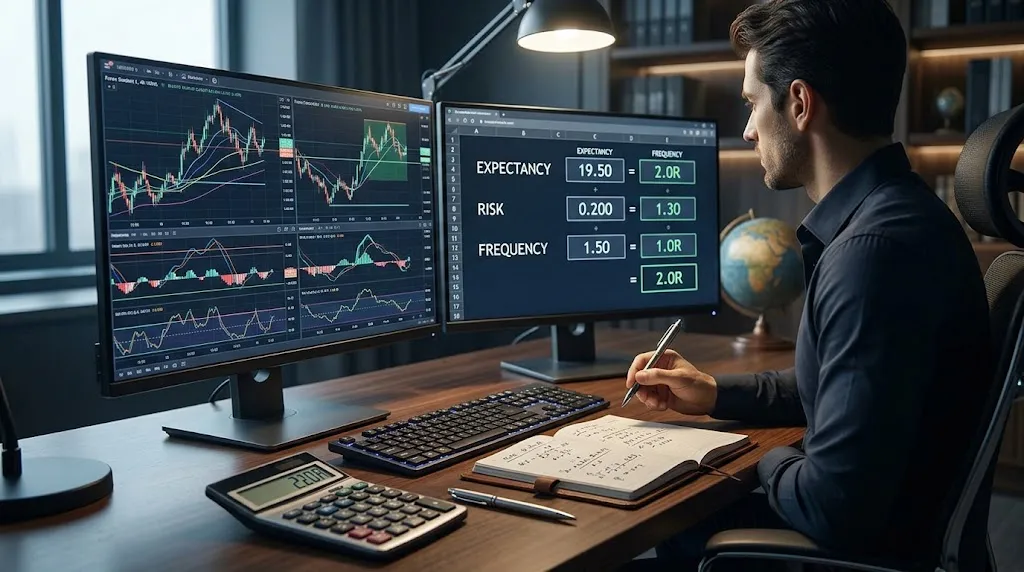
How much money can you make in forex?
The figure isn’t a property of the market: it’s your expectancy per trade, times your risk, times your frequency. Three numbers you can multiply today — and they spot an impossible promise instantly.
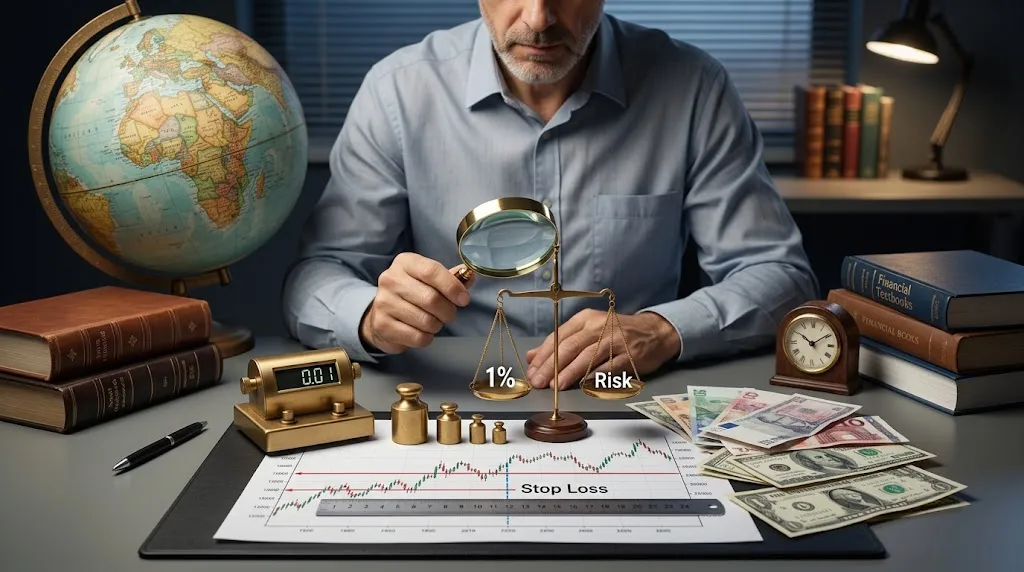
How much money do you need to start forex?
Between $200 and $1,000, and your stop decides it, not the broker. The minimum deposit says what they'll accept; the capital you need is what keeps the smallest trade inside 1% of your account.

How long does it take to learn forex?
There are three answers, because "learning" means three things. Understanding the market is measured in weeks and has an end; a method is measured in trades, not months; and consistency has no date on it.

Is bitcoin any use for trading forex?
Is there a real correlation between bitcoin and forex? We measured 1,449 days: it predicts nothing at any horizon, but strip the dollar out and +0.187 survives against the Australian dollar — risk appetite, not a currency effect.
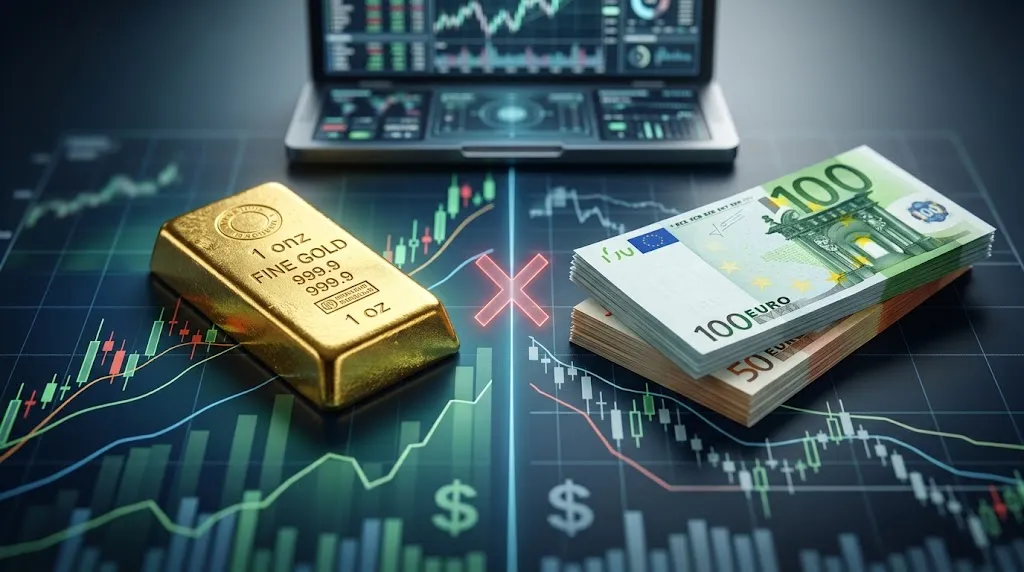
Does gold lead EUR/USD? We measured it on nearly six years of our own data
Gold and EUR/USD move together: +0.393 across nearly six years of our own data. Remove the dollar and −0.014 is all that is left. Why that huge correlation is not a signal.

What are Treasury buybacks, and why did they sink the dollar?
The US Treasury bought back its own bonds, and the dollar fell to three-month lows without anyone touching the currency market. Here is the mechanism behind the Bessent put, and why it is not an intervention.

